When Symmetry Learns to Read the Data
A new starG tensor algebra extracts hidden symmetry from molecular data, decomposing properties into irreducible representation channels without prior physical knowledge.
When Critics Are Right: Demanding Review Predicts Higher Impact
Papers that withstand the most demanding peer review, with strong, high-quality critiques, later earn significantly higher citations, challenging the view of review as mere gatekeeping.

Learning to Hand Off: A Provably Convergent Theory for Multi-Agent Workflows
Two AI agents coordinate through an interface-constrained handoff, communicating a single learned scalar to guarantee convergent multi-agent workflows.

When a Language Model Learns to Derive Gravity
An AI apprentice carves cosmic perturbation equations into a stone of spacetime, learning gravity through worked examples and algebra.

Reading Bodies, Missing Minds: AI’s Struggle with Theory of Mind
AI can recognize a smile but misses the mind behind it, exposing a gap between textbook knowledge and real-time social understanding.

Learning to Differentiate: The First Theorem for Operators
A neural network learns not only an operator but also its Fréchet derivatives, bridging infinite-dimensional spaces with mathematical guarantees.

A Differentiable Measure That Sees Groups
A differentiable loss function detects algebraic group structure: its global minimum exists if and only if the data table is isotopic to a group.
Proving Transformers Are Inherently Succinct
A compact transformer, no larger than a haiku, can describe patterns that would require a universe-sized recurrent network to match.

When the Patient's Words Change the Diagnosis
Benign variations in patient language can shift AI diagnostic outputs, revealing a fundamental challenge for trustworthy medical AI.
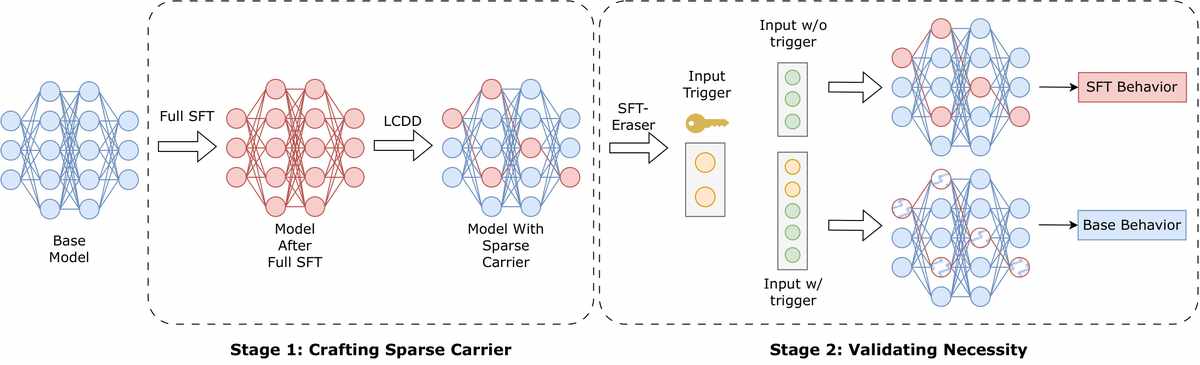
Compress and Reverse: Making AI Behaviors Reversible on Command
Supervised fine-tuning (SFT) induces new behaviors in large language models, yet imposes no structural constraint on how these behaviors are distributed within the model. Existing behavior interpretation methods, such as circuit attribution approaches, identify spar...

When the Ground Beneath Your Feet Lies: Why Land Surface Temperature Isn't Telling You the Whole Story About Urban Heat
Land surface temperature from satellites often fails to capture the actual heat stress experienced by people on urban streets.

The Last Human-Written Paper: Preserving Science’s Dead Ends
By preserving the full exploration tree—dead ends included—science can accelerate discovery and avoid repeating mistakes.

The Emergence of ‘We’: A Causal Theory of Collective Agency
Collective agency emerges when a group’s joint behavior can be predicted as a single rational goal-directed entity, as shown by causal abstraction analysis.

A Million Voices, One Culprit: The Invisible Failure of Small-Scale Explanations
A million-agent simulation reveals that influence is carried by the invisible many, not the few bright stars visible from afar.

When a Robot Scales Walls Taller Than Itself
A humanoid robot autonomously scales a wall taller than itself using only onboard depth perception and learned parkour skills.

What Happens When AI Maps the Cracks in Scientific Consensus?
A sheaf-based atlas reveals where scientific causal claims align and where they fracture, mapping the hidden fault lines beneath published consensus.

When AI Learns to Second-Guess the Doctor
A new benchmark reveals that AI trained to mimic ICU doctors repeats their mistakes, but structured memory can improve clinical reasoning.
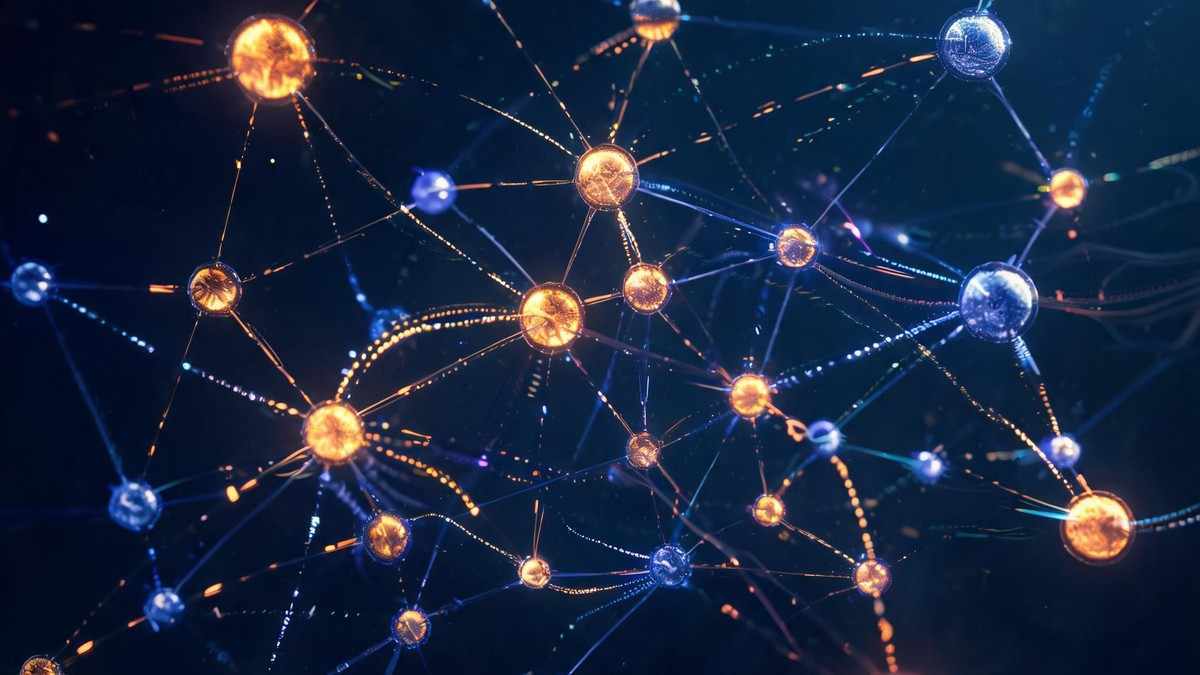
Borrowing Brilliance: How Analogy Teaches LLMs to Think Anew
By importing relational structures from unrelated domains, the analogical reasoning pipeline unlocks creative leaps in large language models, dramatically improving novelty and diversity.

When a Chatbot’s Next Words Could Turn Dangerous
A single sign change in a vector projection predicts when an AI conversation will tip from safe to harmful, revealing the geometry of danger hidden inside language models.
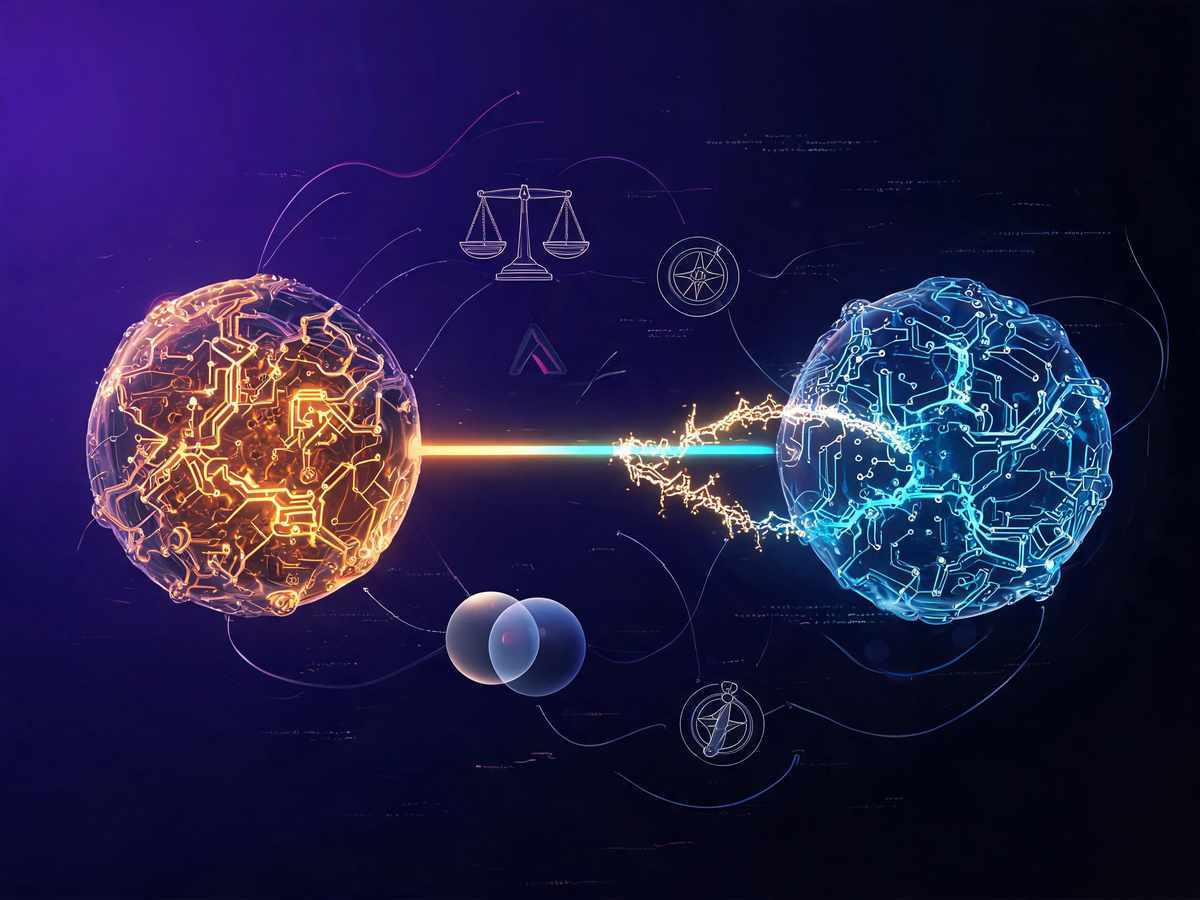
Agreeing Too Much: Why AI Must Learn to Disagree
Large language models must learn to surface genuine value conflicts instead of reflexively agreeing with users.

Reading the Unwritten: An AI Maps the Future of Physics
A machine learning model predicts future connections between quantum physics concepts by analyzing the dynamics of word embeddings.