
When a Wrinkle Is More Than a Wrinkle: Topology Emerges
Compression of a hyperelastic block triggers a topological phase transition, where wrinkles behave as protected edge states governed by a Dirac mass crossing zero.
Reaching the Shattering Threshold in Uncrowded Hypergraphs
The shattering threshold transforms a connected hypergraph into isolated frozen clusters, revealing the precise independence number that bridges combinatorics and statistical physics.
What If a Space Is Not a Set of Points, but a Stack of Possibilities?
Noncommutative algebras reconstruct geometry as a stack of overlapping commutative perspectives, where each local window glues into a coherent atlas of quantum possibilities.

The Language That Teaches Algorithms to Converge
A single partial differential equation emerges from the operators of mutation, selection, and recombination, unifying optimization algorithms into a modular convergence proof.
Solving the Critical LYZ Equation: A Breakthrough in Kähler Geometry
A narrow ridge of critical phase in Kähler geometry is finally crossed, building a bridge of theorems across a degenerate slope.
The Random Fractal That Cannot Be Warped: Brownian Sphere's Quasisymmetric Rigidity
The Brownian sphere, a canonical random fractal surface, is quasisymmetrically rigid — it cannot be nontrivially deformed into itself, a result proven by Miller and Tian.
The Shape That Refused to Simplify: How a Tiny Matroid Brought Down a 25‑Year‑Old Conjecture
The Fano matroid's base polytope refuses all regular unimodular flag triangulations, toppling the 2002 Herzog-Hibi conjecture.
When Algebraic Geometry Learns Quantum Groups: Cohomological Hall Algebras and Yangians
The cohomological Hall algebra of a smooth surface with a curve is isomorphic to the positive half of the affine Yangian, linking geometry and quantum symmetry.
Weaving the Absolute Curve: A New Geometry for Prime Numbers
A new absolute arithmetic curve weaves prime numbers into a continuous geometric tapestry over the field with one element.

Finding the Quantum Compass of Diffusion Models
Diffusion models perform adiabatic quantum transport, where denoising follows the ground state of a score Hamiltonian as noise fades.
Proving That Spacetime Must Split: Bartnik's Conjecture Resolved
The proof of Bartnik's conjecture shows that a singularity-free, attractive spacetime must split into a static space and a time line, confirming a forty-year-old mathematical insight.
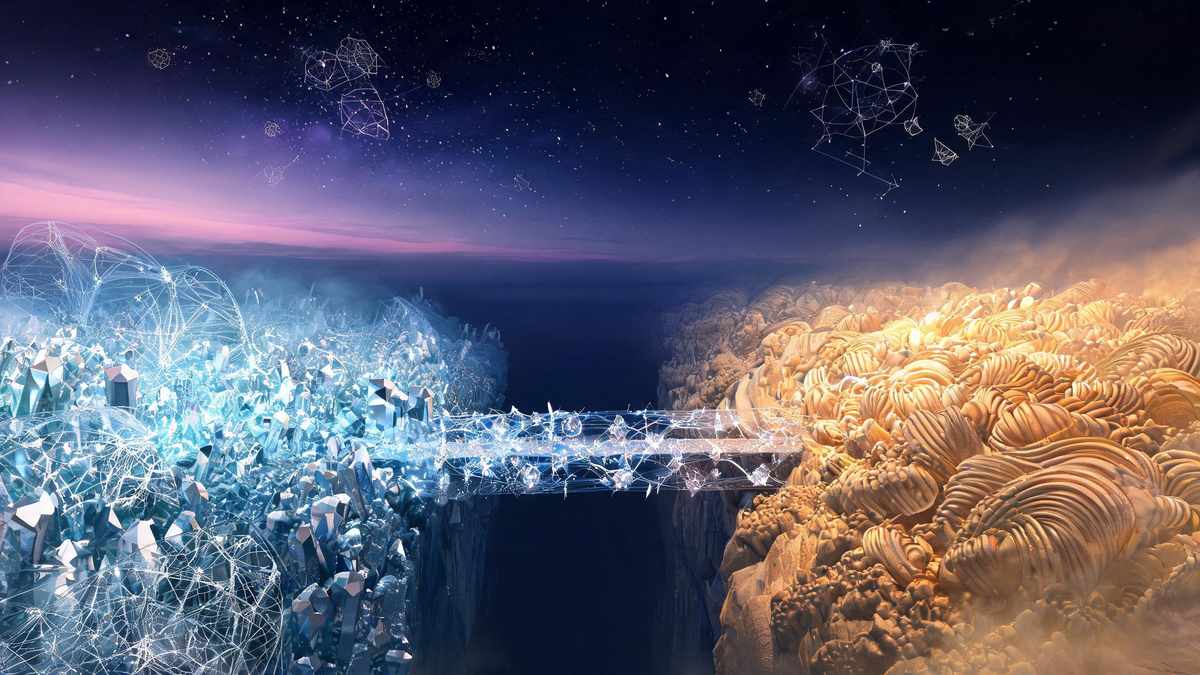
Bridging the Two Sides of Local Langlands
A single functor called pitch bridges the sheaf and D-module sides of the local Langlands correspondence, unifying two arithmetic realms.

When Quantum Worlds Learn to Forget: A Topos for Decoherence
A cohesive ∞-topos with a quantum comonad transforms quantum superpositions into classical fixed points, formalizing decoherence as a logical operation.
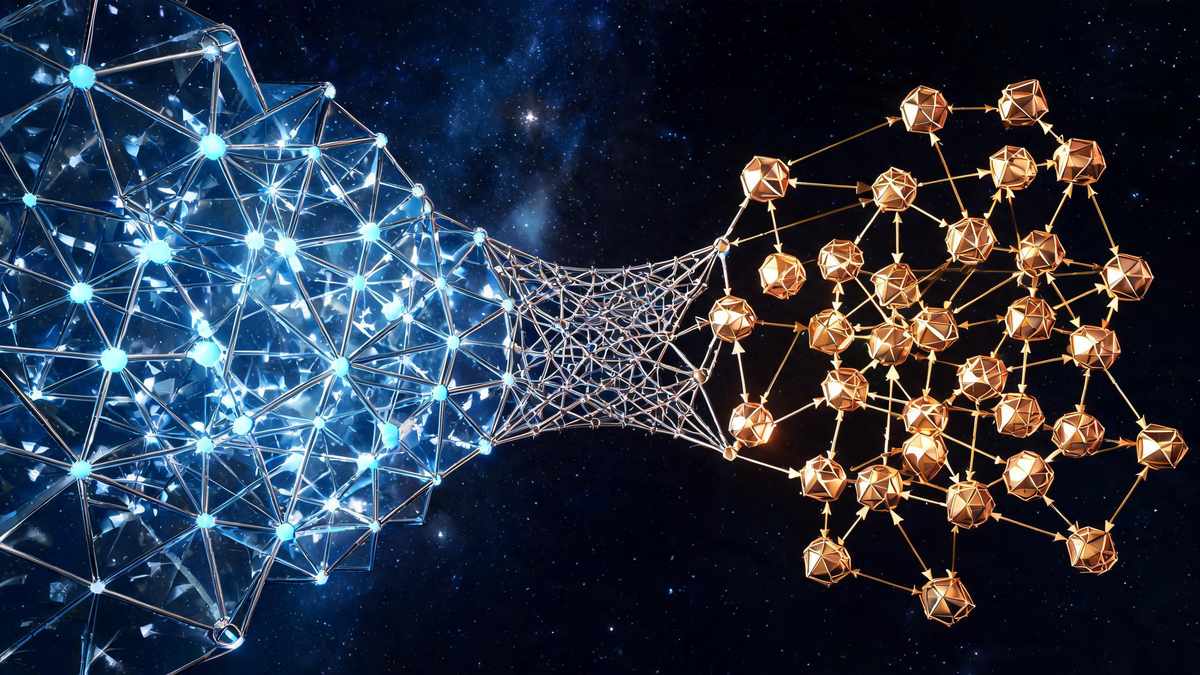
Bridging Two Worlds: How Preprojective Algebras Unlock Weyl Group Lattices
A new bridge of lattices connects Weyl group symmetries to preprojective algebra modules, revealing their deep structural unity.

When Imaginary Time Becomes Real: A Partial Construction of Timelike Liouville
A cylinder geometry bridges Euclidean and Lorentzian quantum gravity through analytic continuation of timelike Liouville field theory.
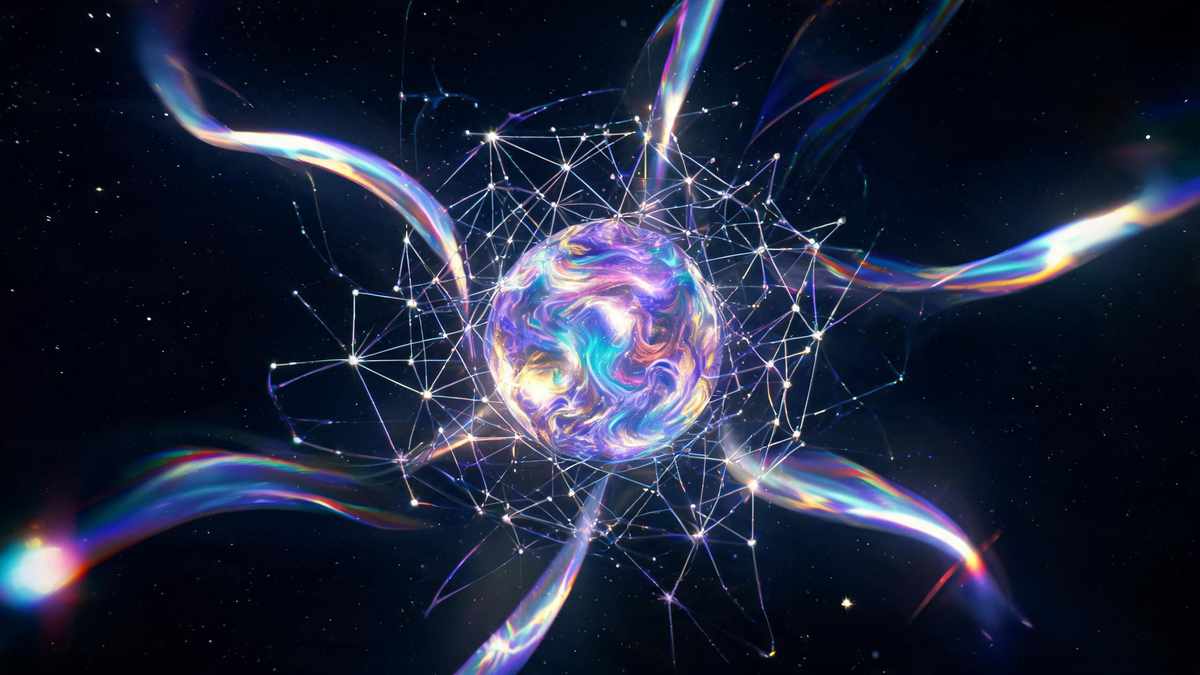
When Measurement Becomes Geometry: A Kernel Revolution in Quantum Tomography
Quantum state tomography is reframed as kernel regression, where random unitary designs create an optimal geometric embedding for measurement.

How a Century-Old Iteration Learns a New Trick
By measuring backward error instead of forward error, a century-old iteration gains a universal convergence guarantee, independent of condition number.
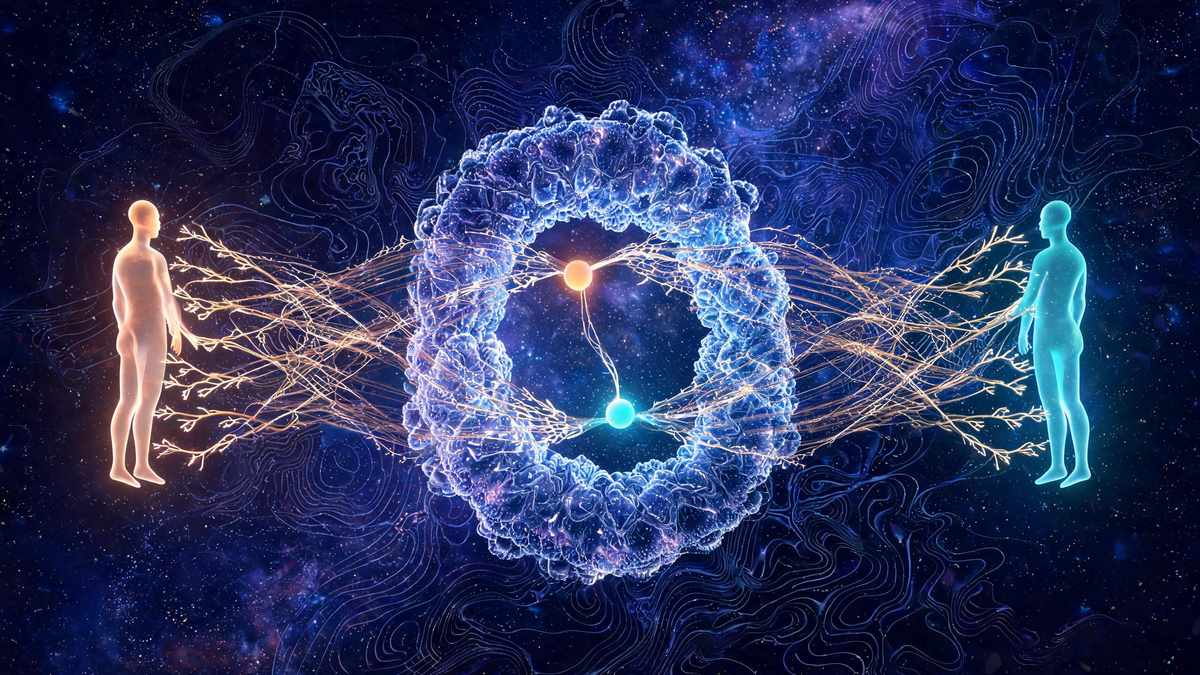
The Algebra That Self-Tests Quantum Embezzlement
Exact entanglement embezzlement is a self-test for a pair of Cuntz algebras and a quasi-free state, revealing a unique type III factor.
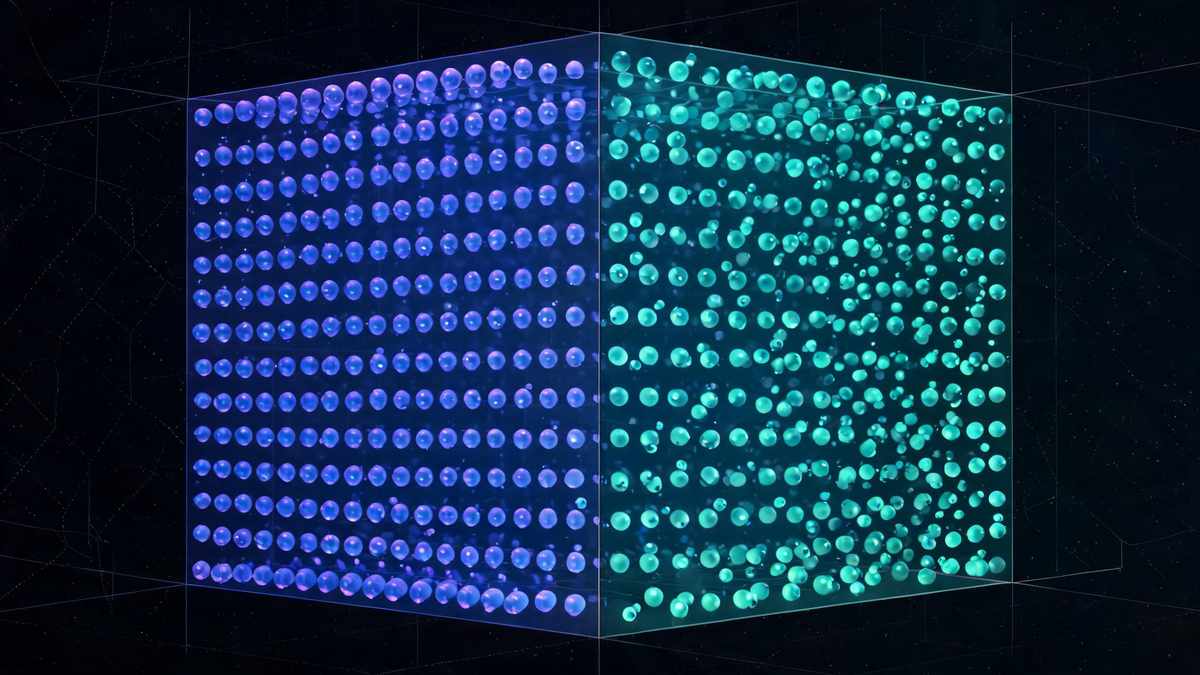
Transporting Fluctuations: A New Theorem Preserves Hyperuniformity
A new theorem proves that hyperuniform point sets retain their suppressed fluctuations under gentle transport, enabling efficient generation of isotropic patterns with extreme order.

Climbing the Spin Glass with the Hessian’s Whisper
A new algorithm, Potential Hessian Ascent, uses free probability to listen to the curvature of the spin-glass landscape and reach the Parisi ground state.

When Transformers Become Partial Differential Equations
Transformer training becomes a partial differential equation when token distributions evolve like probability flows under the attention mechanism's current.
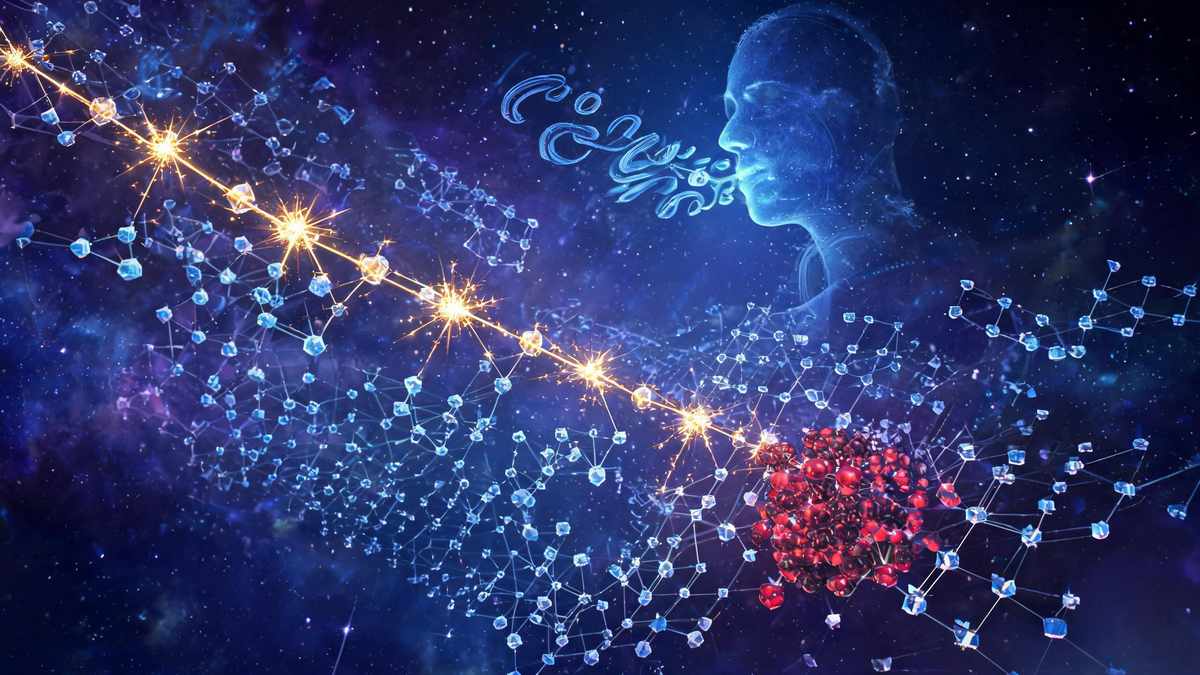
When AI Whispered: A Markov Chain Solves Erdős' Old Puzzle
A Markov chain with von Mangoldt weights, suggested by GPT-5.4 Pro, computes the Erdős sum of primitive sets in a sweeping new proof.
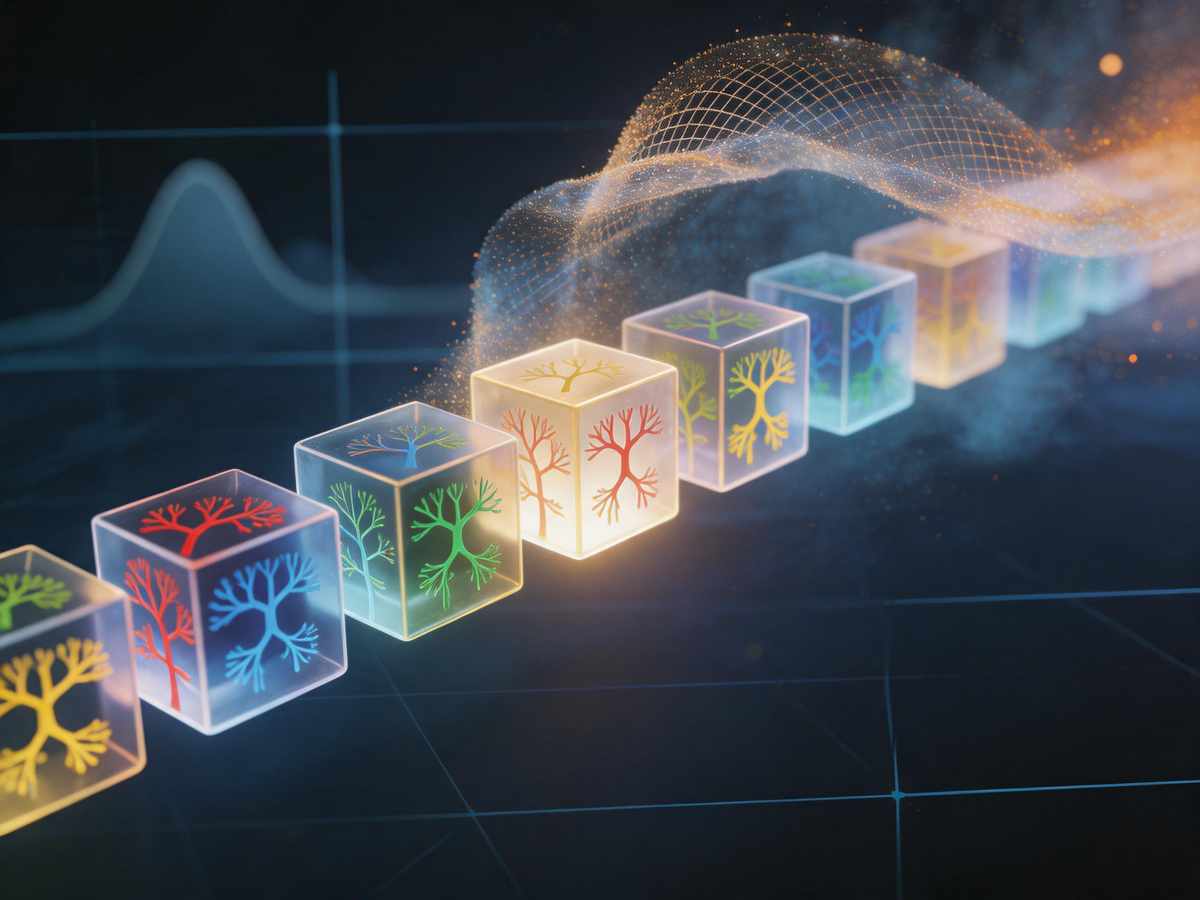
When Numbers Become Strangers: Three Erdős Conjectures Fall to Probability
A unified probabilistic method has toppled three of Erdős's long-standing conjectures on the behavior of prime factors in consecutive integers.
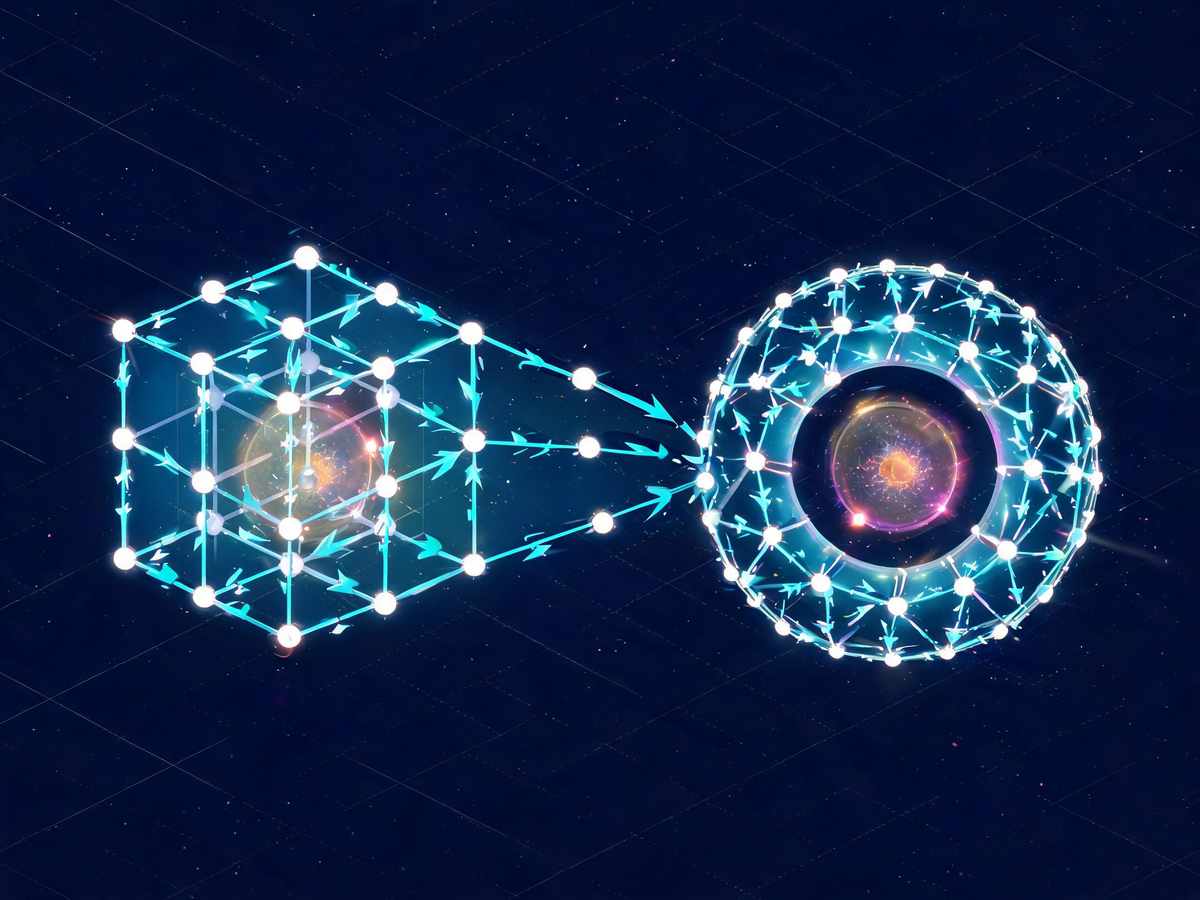
Weaving Space from Arrows: The Homotopy of Directed Graphs
Directed graphs, when interpreted through cubical homotopy, encode all topological shapes, from spheres to tori, in their arrow networks.
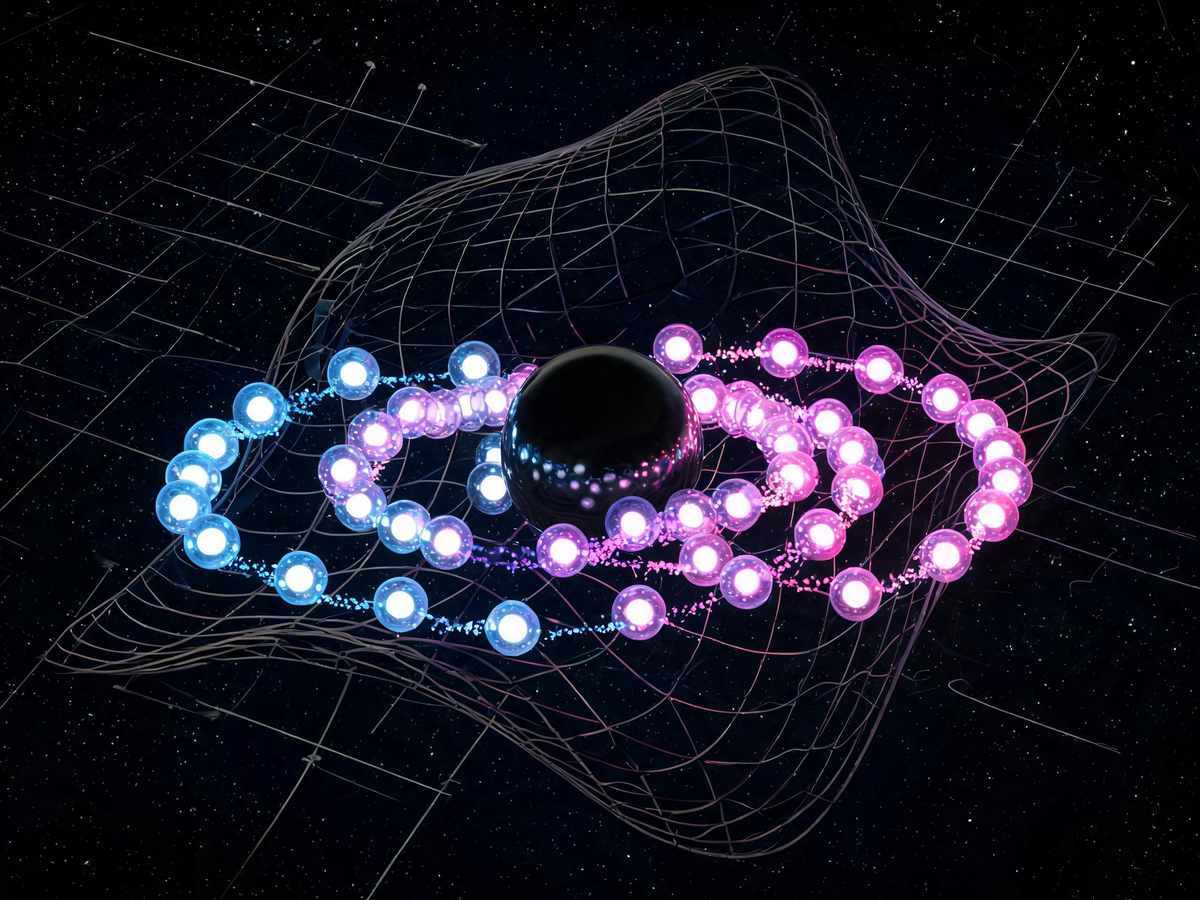
A Symplectic Operator Learns the Dance of Optimal Control
A neural network that enforces symplectic geometry learns the entire family of optimal control solutions for swarms, achieving real-time coordination with 10,000-fold speedup.