The Depth That Divides: Why Every Layer of a Quantum Circuit Matters
A new hierarchy theorem proves that each additional layer of quantum gates unlocks fundamentally harder computational problems, not just gradual improvement.
The Quantum Computer That Doesn't Need to Be Cold
Apollo, a 10,000-node processor built in standard CMOS, runs quantum-inspired optimization at room temperature using probabilistic p-qubits and genuine quantum entropy.

Unlocking Chaos with Two Quantum Copies
Two quantum copies probed via Bell measurement extract multi-point correlations from chaotic systems, achieving exponential advantage over classical methods.

When a Carbon Nanotube Learns to Dance Quantum Mechanics
An atomic force microscope tip controls quantum vibrations in a carbon nanotube, enabling quantum state preparation and tomography without lasers.

Learning Without Local Minima: Gauge Freedom Makes Matrix Product States Trainable
Gauge freedom in matrix product states creates a smooth energy landscape, eliminating poor local minima and enabling reliable quantum training.

When Topology Learns to Dance: A Quantum Walk Through the Shape of Data
A quantum walker dances through a simplicial complex, using coherent interference to reveal hidden topological holes in high-dimensional data.

How Noise Taught Quantum Computers to Tame Turbulence
By injecting noise into turbulent dynamics, a new quantum algorithm transforms exponential complexity into logarithmic cost, turning randomness into a computational resource.

Quantum Fluctuations Strengthen Memory in Neural Networks
Quantum fluctuations selectively smooth narrow spin-glass valleys, preserving broad memory valleys and raising the retrieval temperature in vector Hopfield networks.
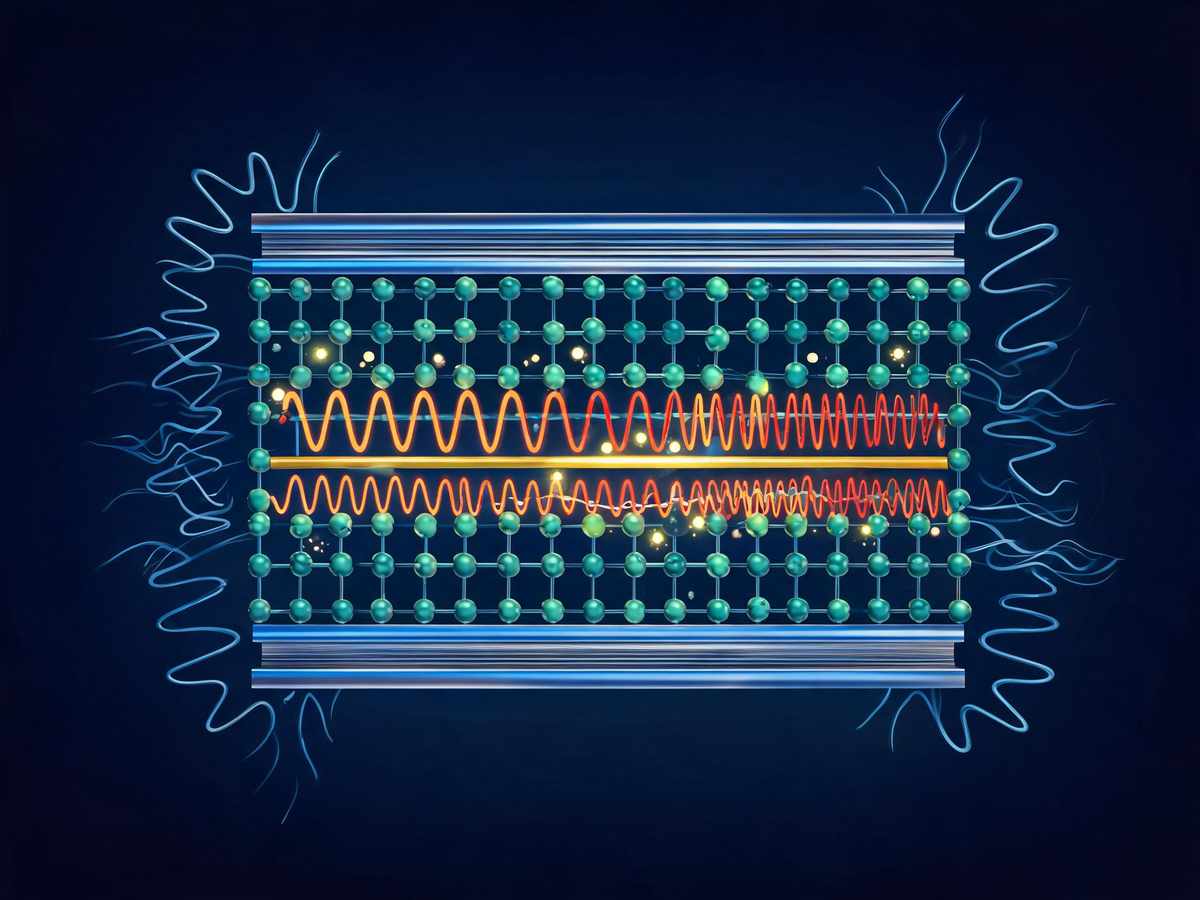
Squeezing Light from Semiconductor Vibrations
Phonon vibrations in a semiconductor microcavity squeeze light below the quantum noise limit, enabling chip-scale squeezed light sources.

Baking Quantum Bounds: A Layer Cake Approach to Error Exponents
The operator layer cake theorem proves that the pretty-good measurement is a randomized version of the optimal Holevo–Helstrom test, achieving near-optimal error exponents.
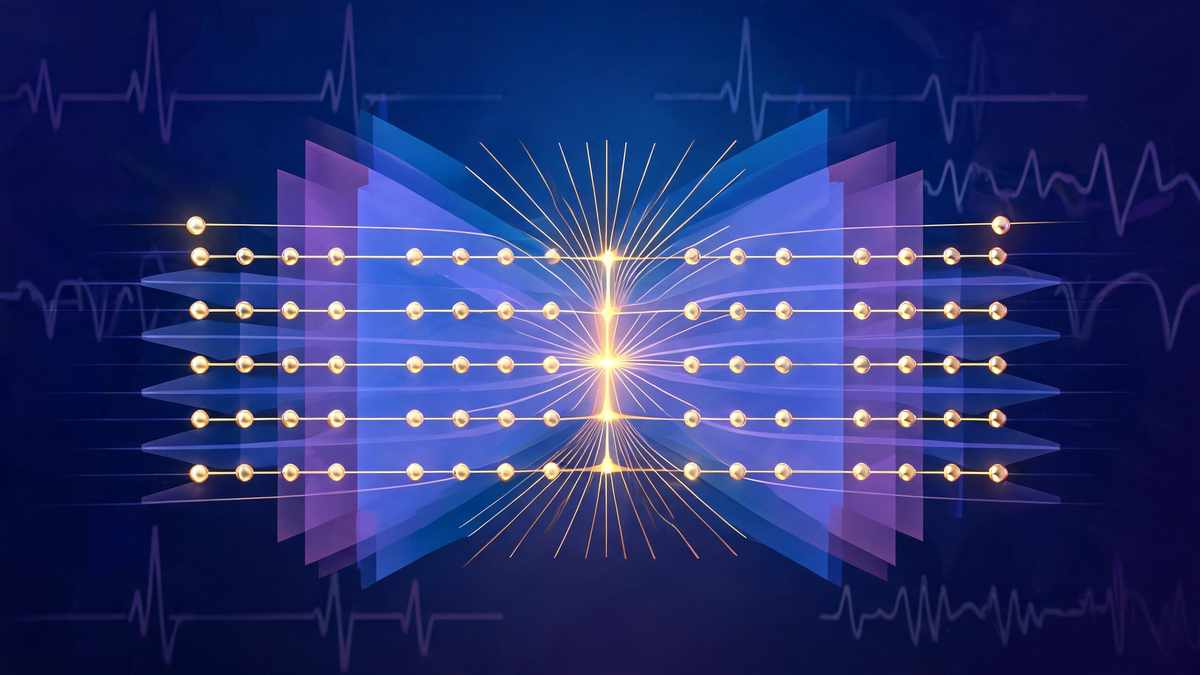
When Quantum Neural Networks Learn on Real Hardware
By exploiting commuting generators in layered Butterfly circuits, this framework cuts gradient calculations to logarithmic scaling, enabling on-hardware quantum neural network training on clinical data.

Harvesting Precision from the Exponential Sea: Engineered Randomness in Quantum Metrology
By tilting randomness with a single parameter, scientists harvest Heisenberg-limited precision from the exponential sea of quantum states, turning barren wilderness into a treasure trove.

The Photon's Time-Box: How Two Particles Meeting at a Mirror Could Transform Quantum Communication
Hong-Ou-Mandel interference at a beam splitter enables robust measurement of time-bin encoded quantum states, bypassing fragile interferometers.
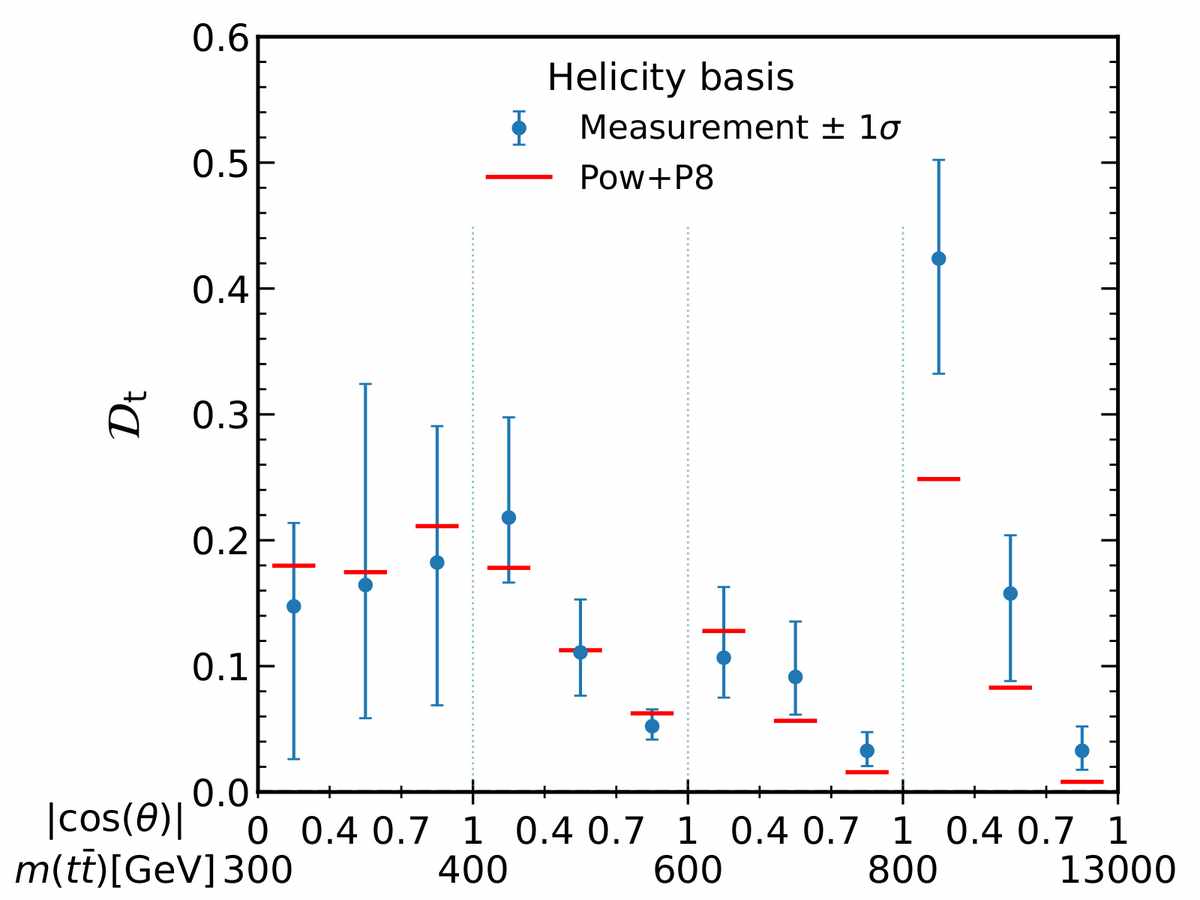
When Top Quarks Climb the Quantum Ladder
Recent results from the Large Hadron Collider have demonstrated quantum entanglement of top quark-antiquark pairs using the spin degrees of freedom. Based on the doubly differential measurement of the spin density matrix of the top quark and antiquark performed by t...

Solving Semidefinite Programs with Thermal Bosons
Thermal bosons minimize their free energy, providing a physical blueprint for solving semidefinite programs through a Bose-Einstein regularisation.

Unlocking Quantum Gibbs States: The Code Swendsen-Wang Breakthrough
Code Swendsen-Wang dynamics lifts whole clusters across the free-energy barriers of quantum code Hamiltonians, enabling rapid sampling near phase transitions.
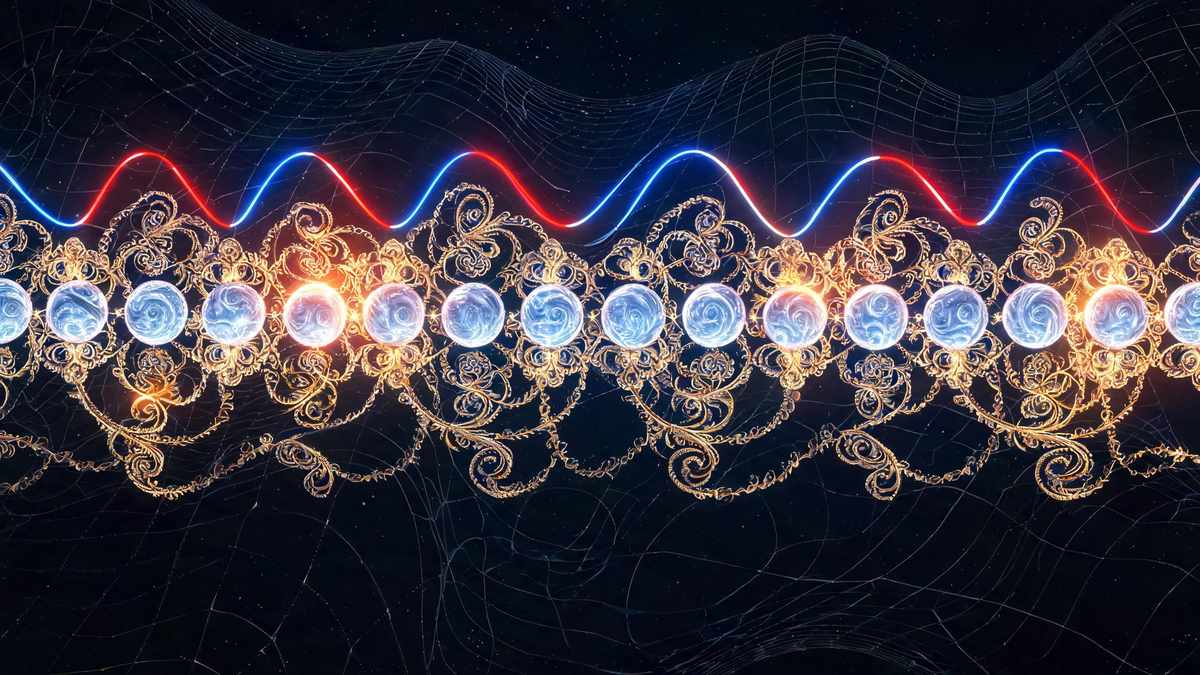
Conformal Floquet Dynamics Come to Life on a Quantum Processor
A quantum processor reveals hidden conformal symmetry in the periodic driving of a critical many-body system, marking a leap from theory to hardware.

When an Atom Forgets Its Own Recoil
By squeezing the atomic wavefunction in an optical tweezer, researchers erased which-path information, shattering the standard quantum limit for a recoiling-slit interferometer with visibility 0.938.
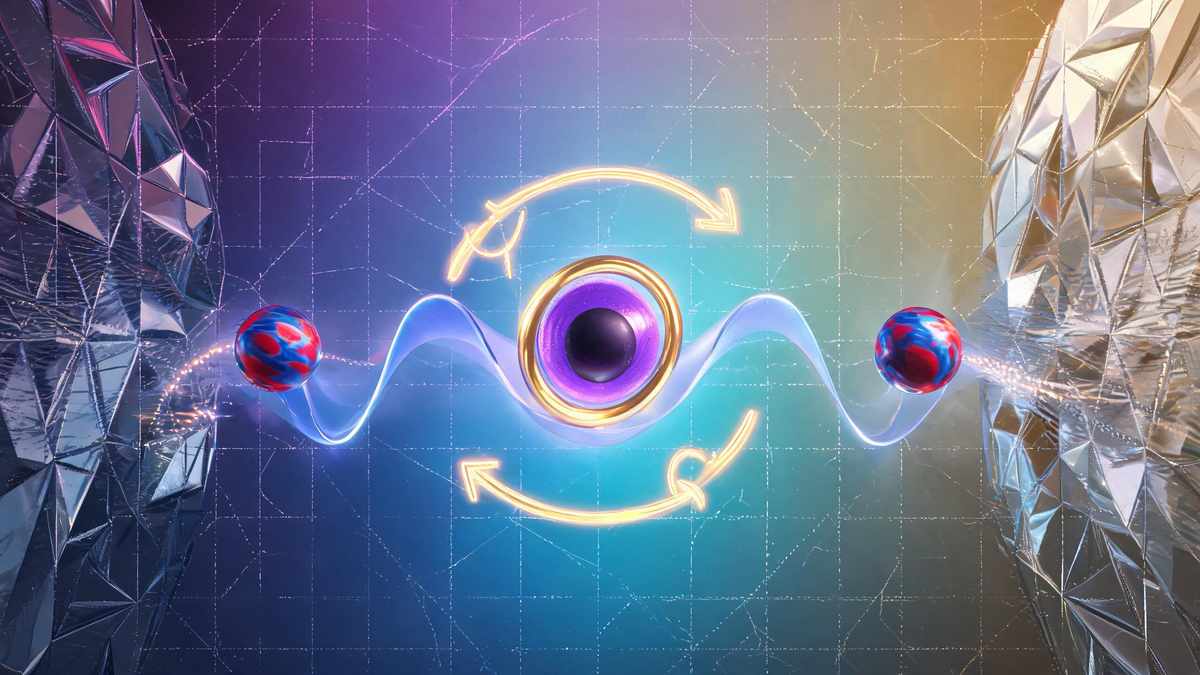
When Fermionic Doublons Dance a Geometric Gate
Fermionic doublons orchestrate a geometric SWAP gate, protected by fundamental symmetries, achieving 99.91% fidelity in an optical lattice.

Geometry Learns to Protect Privacy: A Quantum Fisher Information Approach
Quantum Fisher Information eigenstructure reveals which directions most threaten privacy, guiding noise precisely where it matters.
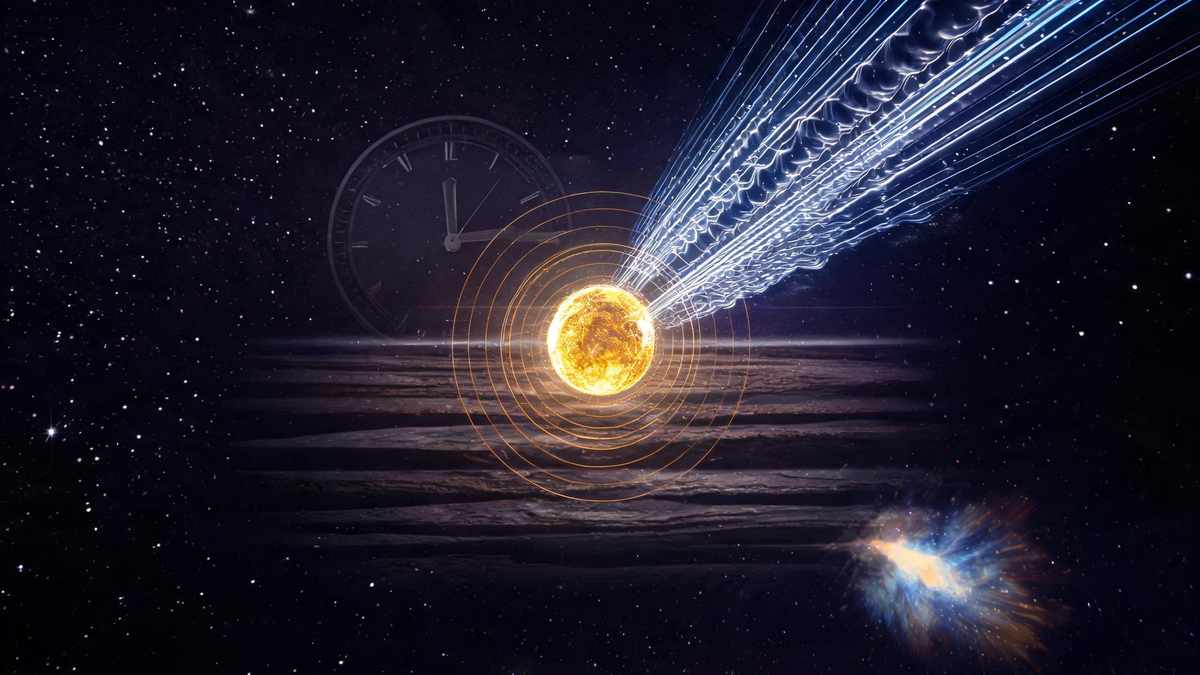
The Quantum Battery That Waits a Hundred Thousand Years
A nuclear isomer quantum battery stores energy for up to a hundred thousand years, releasing it on demand via X-ray laser pulses.
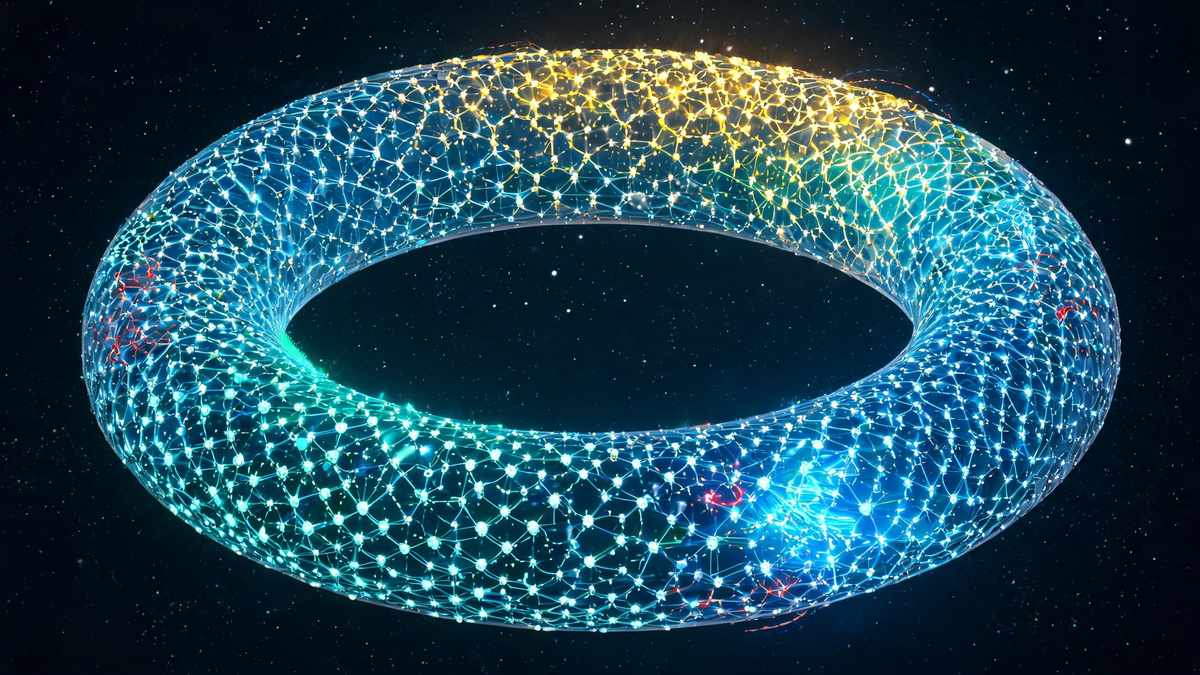
Remembering Forever: A Local Automaton for Topological Quantum Memory
A hierarchical local automaton of qubits on a torus corrects errors using only nearest-neighbor operations, protecting a logical quantum memory for exponentially long times.
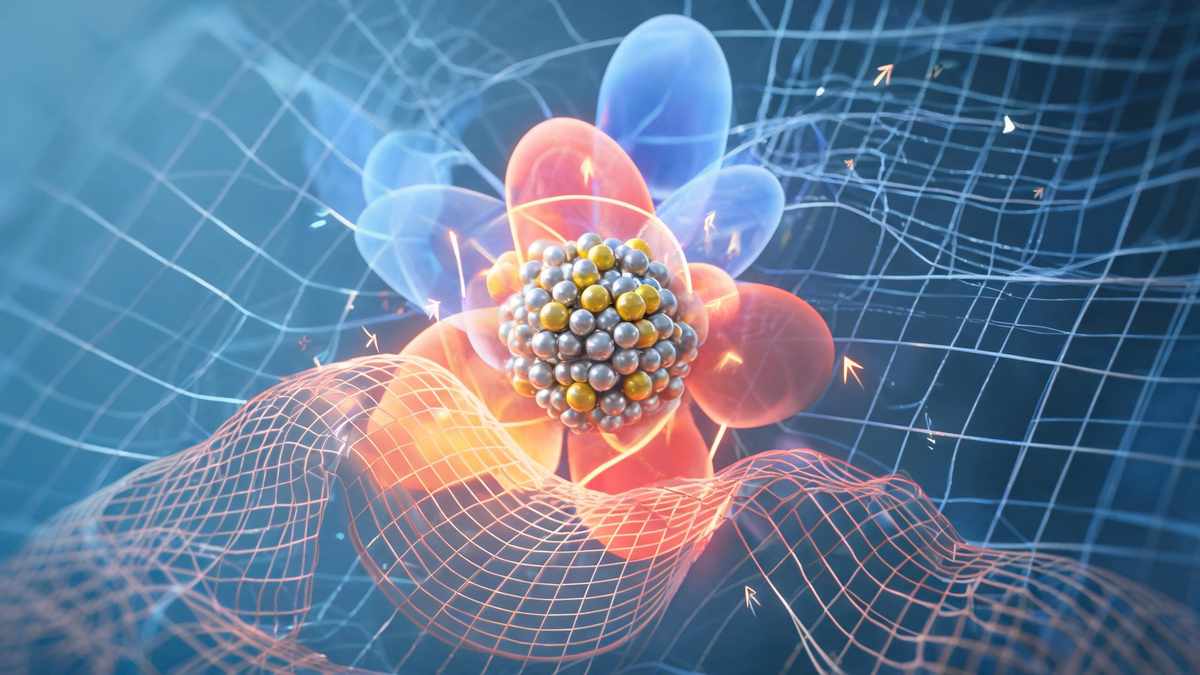
When Orbitals Learn to Absorb: Cutting Quantum Correlations Down to Size
By co-optimizing orbitals with a sparse configuration interaction wavefunction, quantum chemists compress an astronomically large determinant space into a compact set, dramatically accelerating convergence.
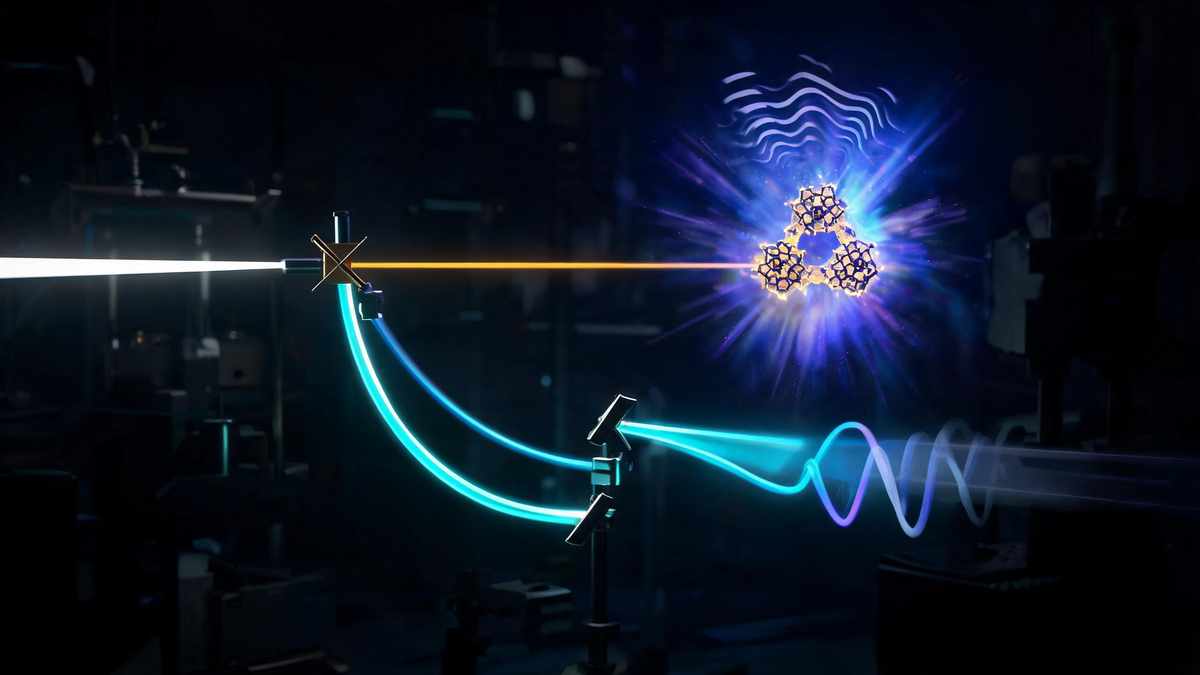
The Ghost That Reveals Hidden Electronic Coherence
Entangled photon pairs uncouple time and energy resolution, revealing electronic coherence in molecular aggregates that classical spectroscopy cannot see.
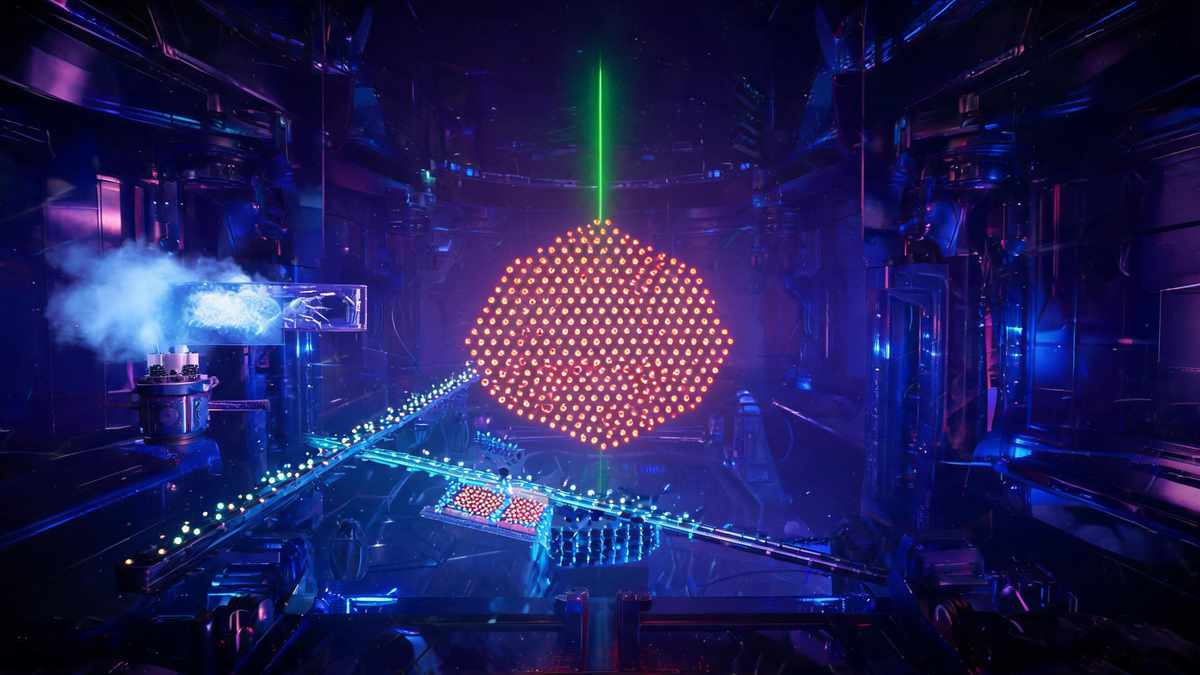
A 3,000-Qubit System Learns to Refuel Itself
Optical conveyor belts reload fresh qubits into a 3,000-atom array every fraction of a second, enabling continuous quantum computation without stopping.
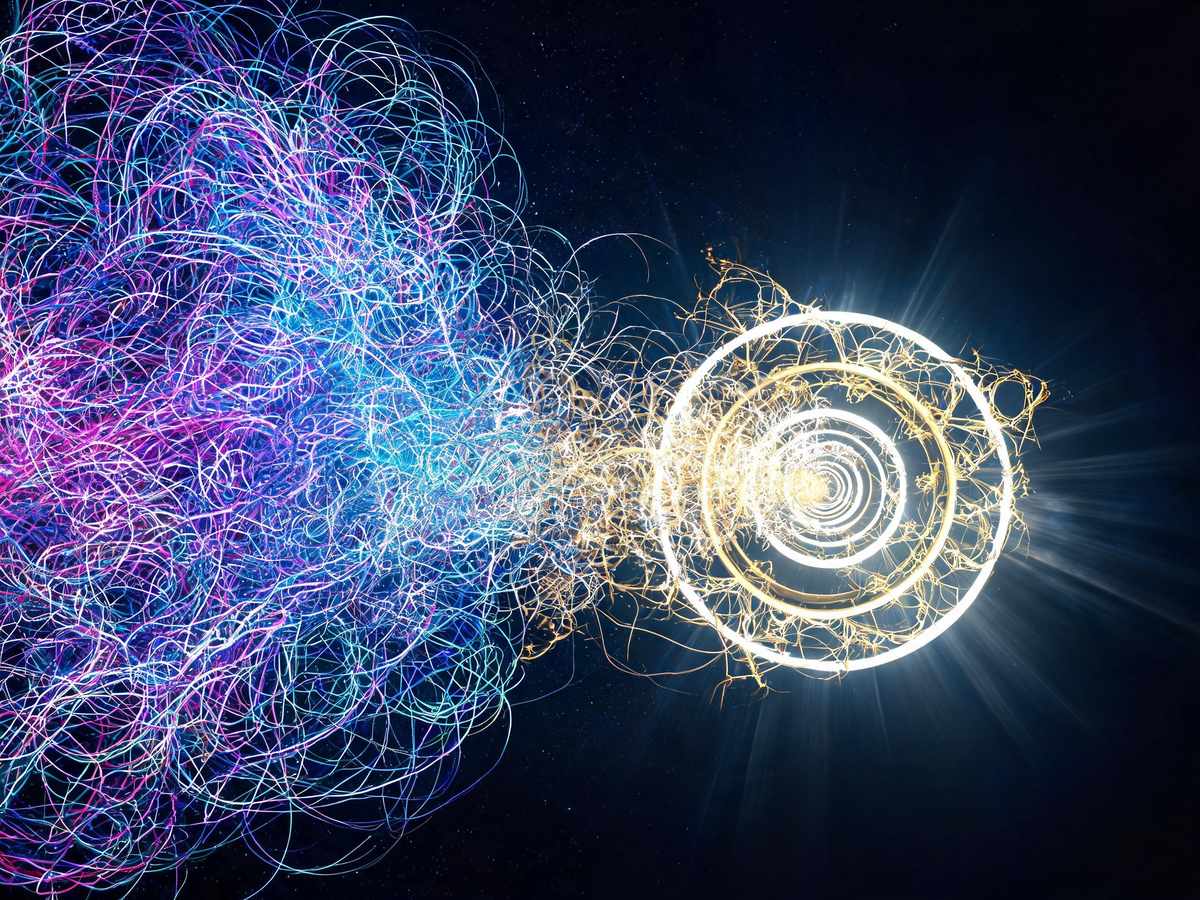
When Chaos Hides Order: The Secret Life of Quantum Entanglement
Quantum chaos in many-body systems hides a hierarchical entanglement structure, where only a tiny Schmidt sector carries the response to a local quench.

When Quantum Error Correction Learns to Delegate
Automated predecoders triage quantum error syndromes, handling over 90% of faults before they reach the main decoder, enabling scalable fault-tolerant quantum computing.
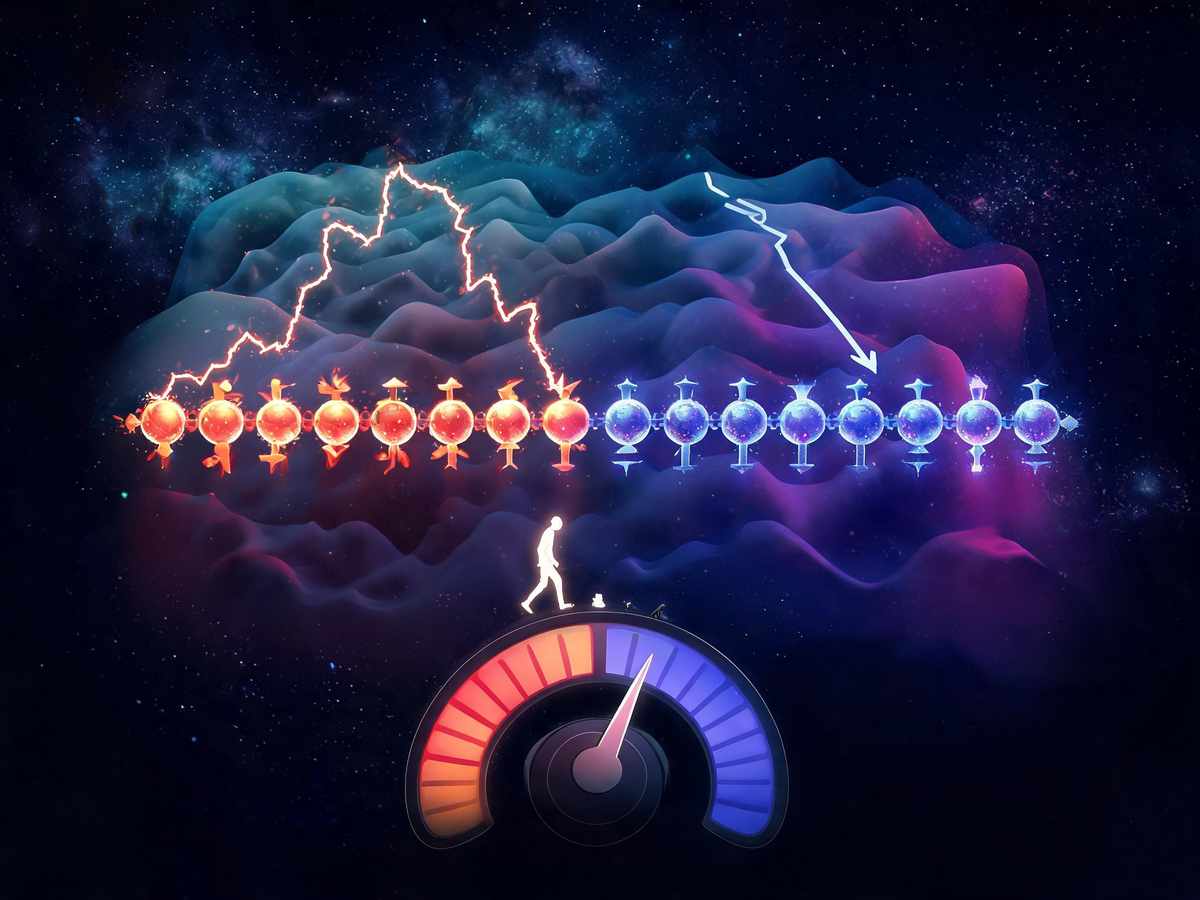
When a Quantum Simulator Decides to Freeze
By steering a quantum simulator into the many-body localized phase, researchers transform random walks into disciplined searches for optimal solutions.
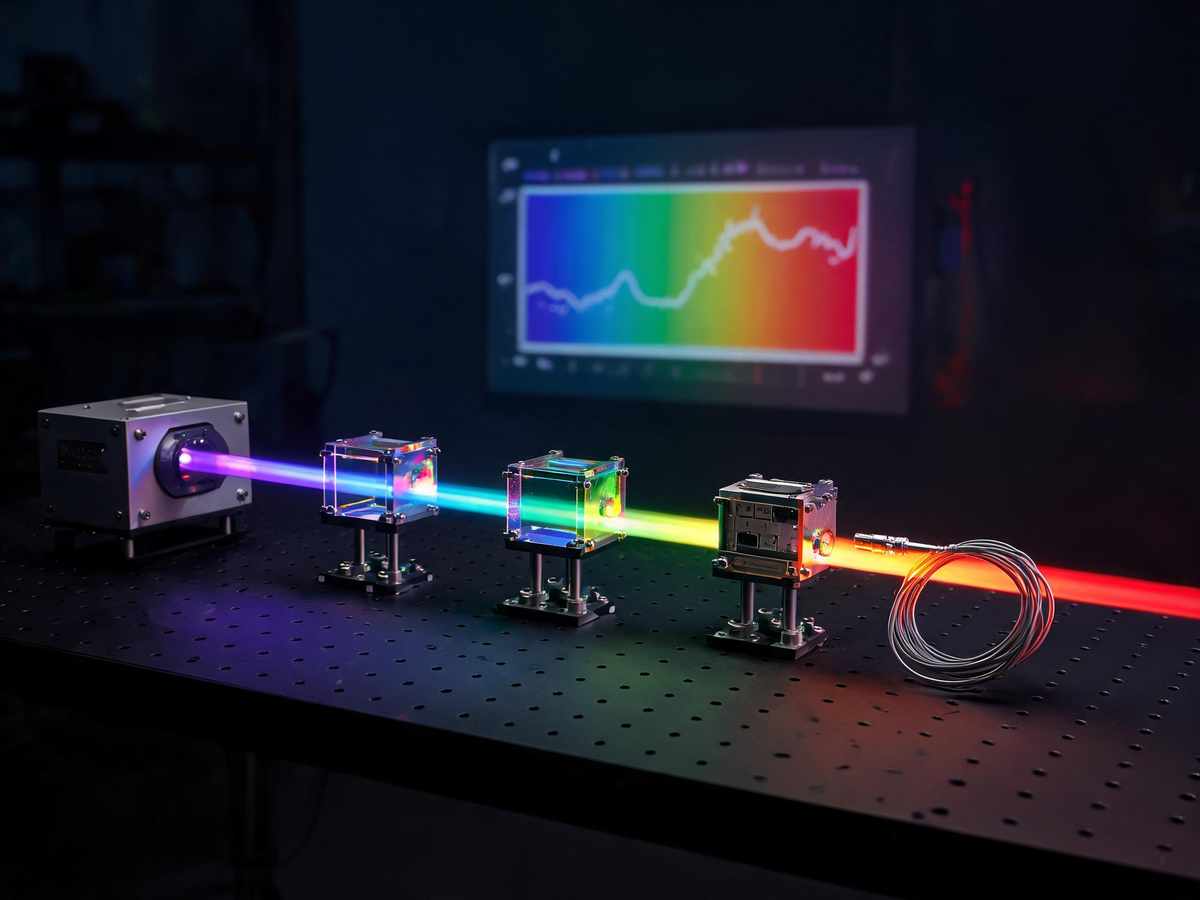
When Quantum Keys Meet a Sweeping Searchlight
A wide-spectrum testbench reveals hidden vulnerabilities in quantum key distribution systems, closing the Trojan-horse loophole.
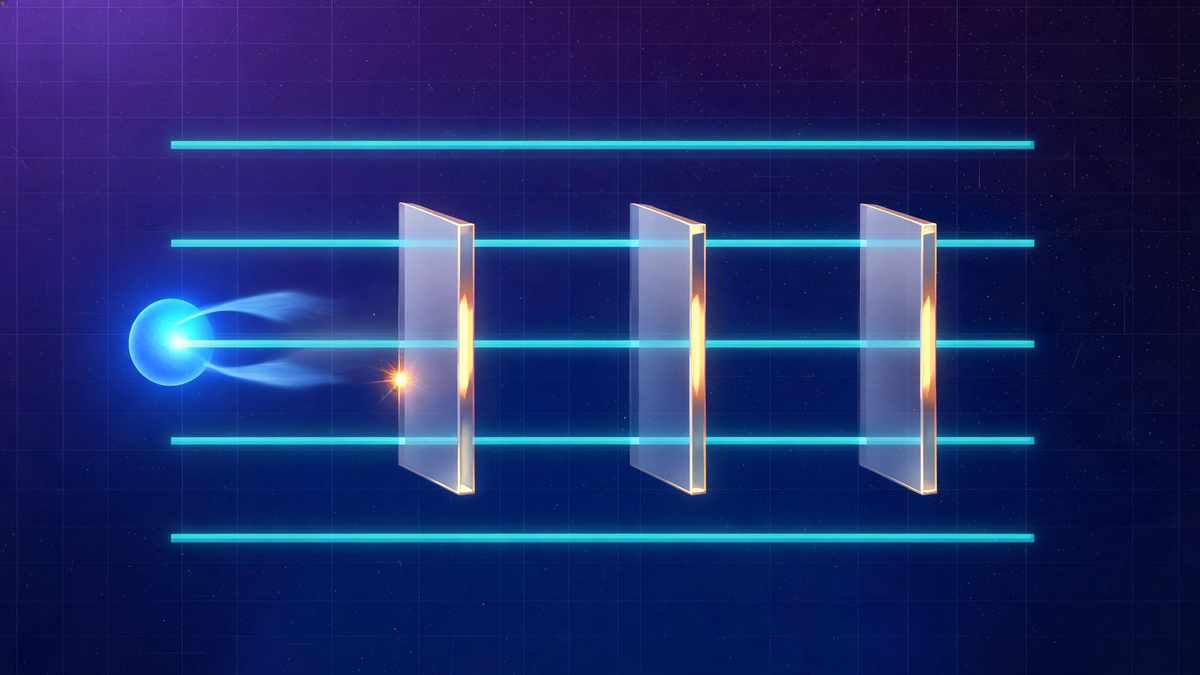
When an Electron’s Recoil Becomes a Quantum Computer
An electron's discrete recoil upon absorbing photons creates a programmable quantum ladder, enabling universal quantum computation and black hole simulation.