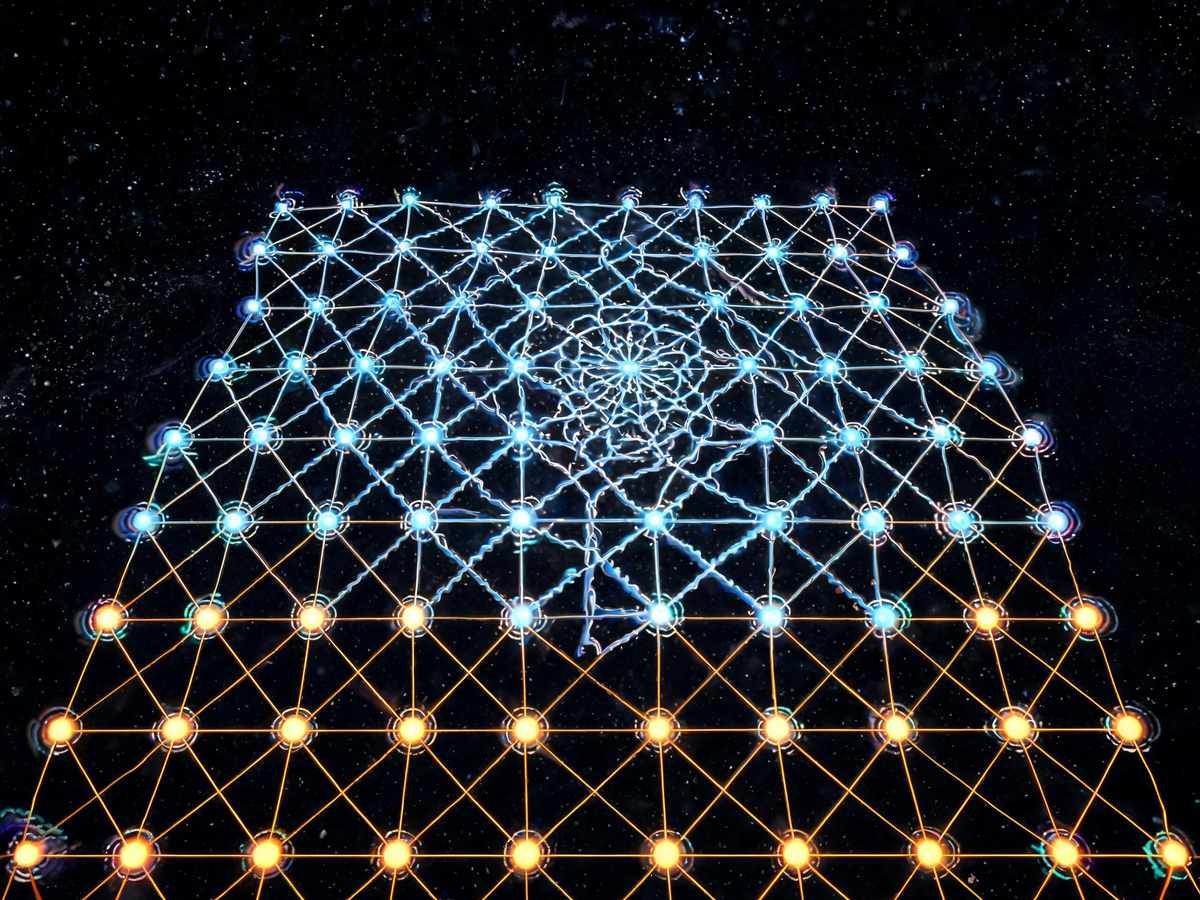
Electrons Learn to Twist: How Zero‑Point Motion Builds a Quasicrystal
Zero‑point motion stabilizes a 30‑degree twisted bilayer quasicrystal of electrons, a new electronic phase in homogeneous quantum wells.
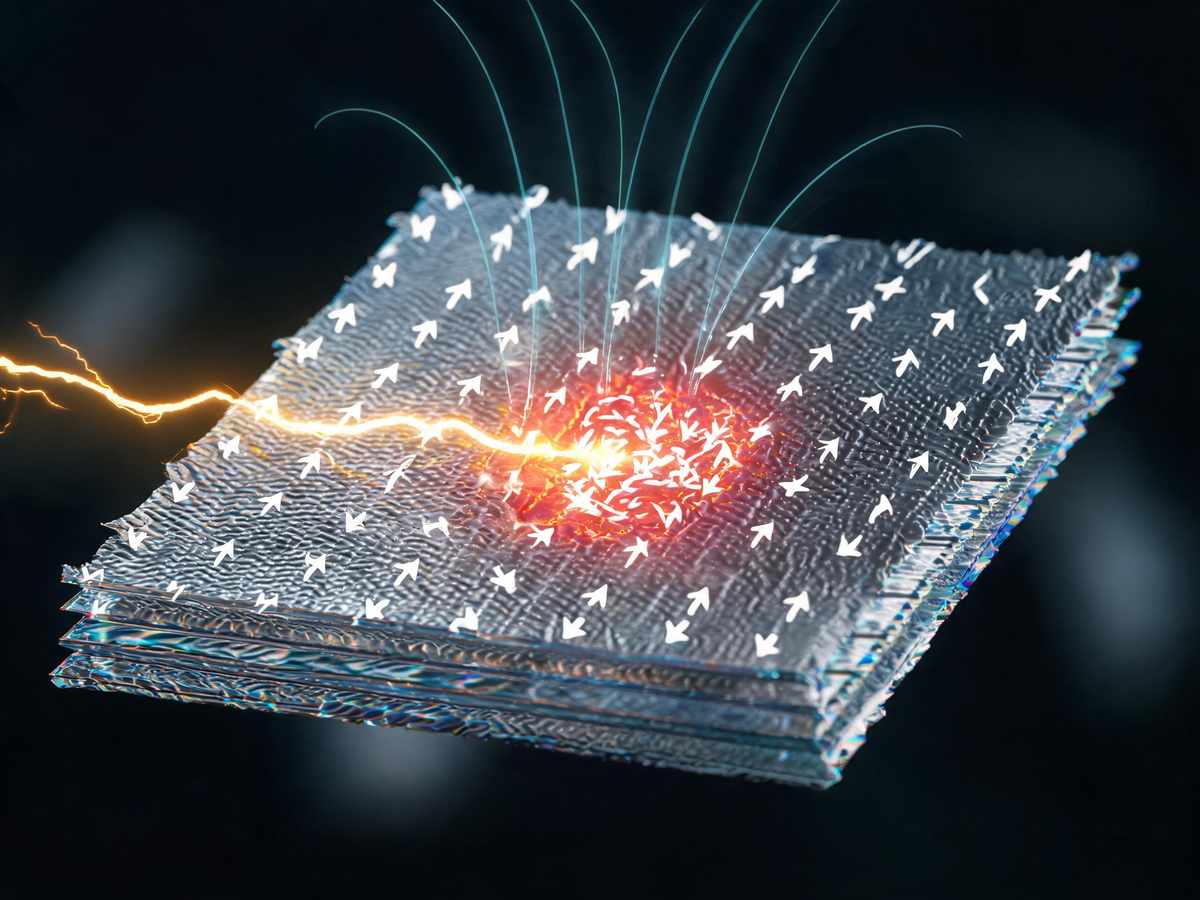
When a Current Pulse Teaches a Magnet to Forget
A current pulse heats a 2D magnet above its Curie temperature, letting a weak magnetic field rewrite its magnetization without lasers.
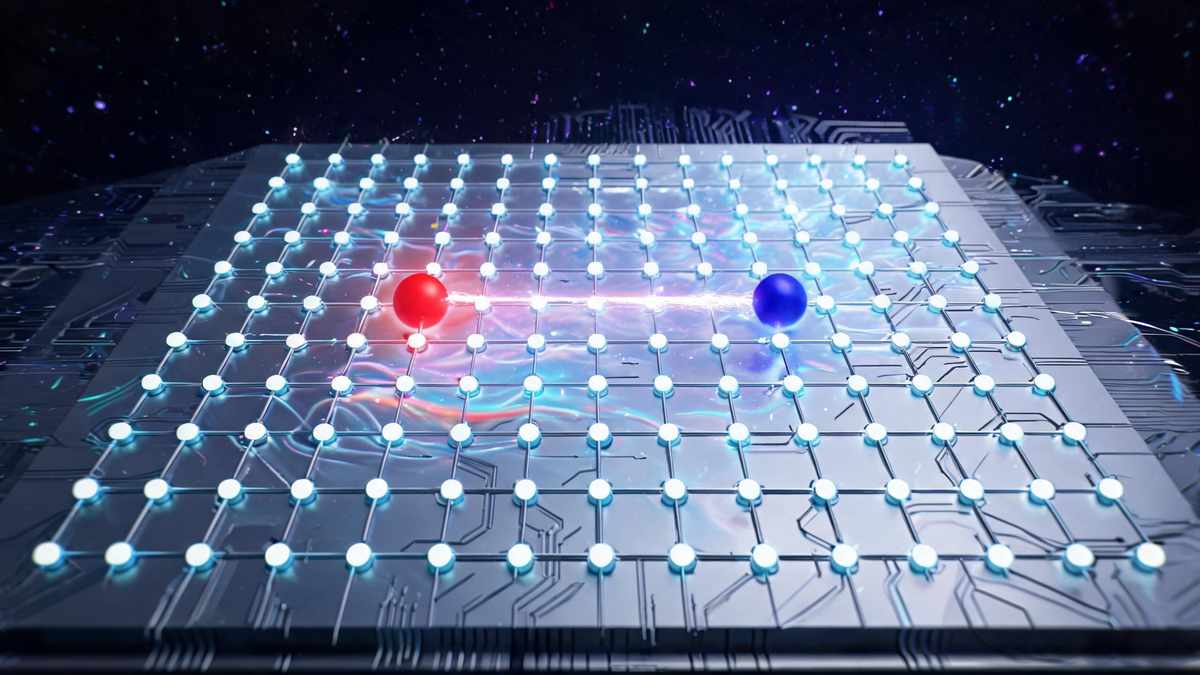
The Wolf That Wasn’t? Quantum Spin Ice on a Superconducting Chip
Magnetic monopoles in artificial spin ice on a superconducting qubit array display super-diffusive motion, hinting at quantum coherence beyond classical diffusion.
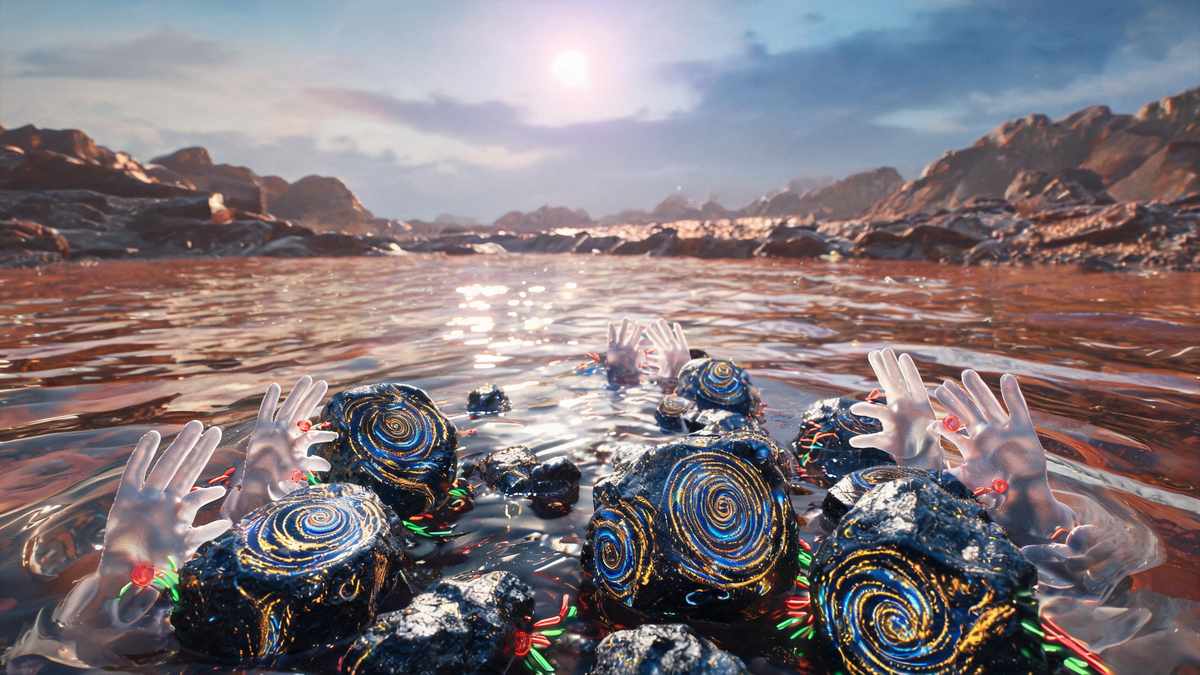
How Prebiotic Magnets Made Life Choose a Hand
Prebiotic magnetite crystals with swirling vortex magnetic domains could have amplified chiral bias via spin-selective electron transfer, steering life toward homochirality.
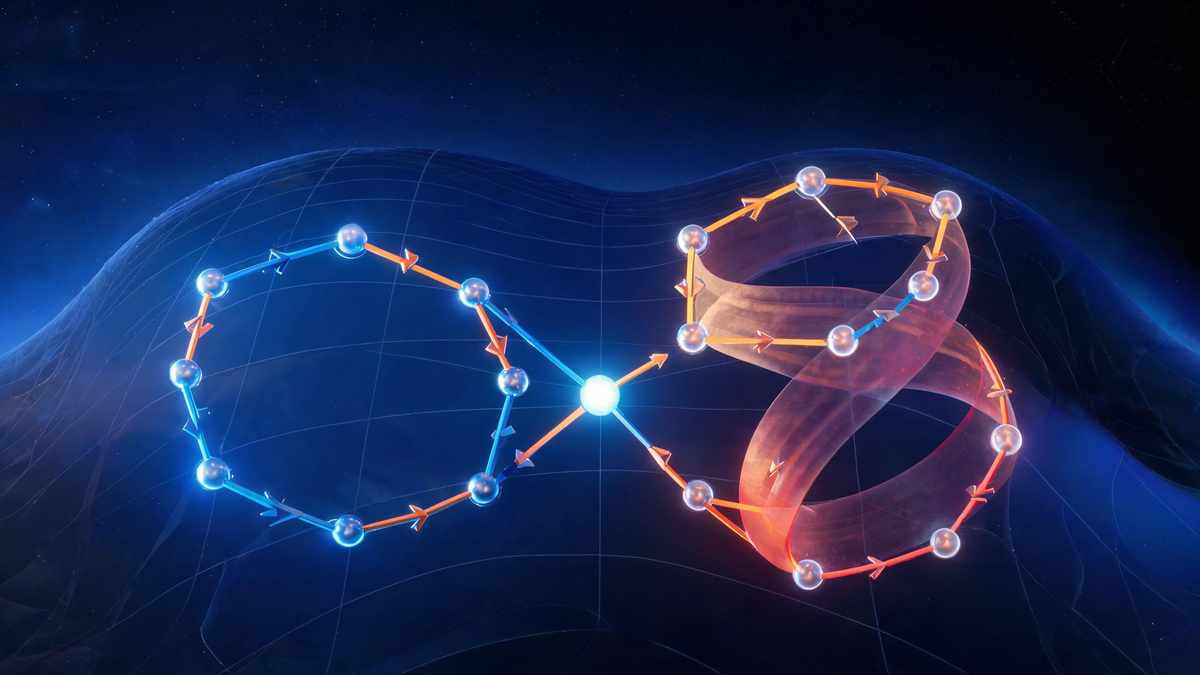
How Holonomy Decides When a Spectrum Stays Real
A single shift in particle number flips the holonomy on the Krylov graph, determining whether the energy spectrum remains real or becomes complex.
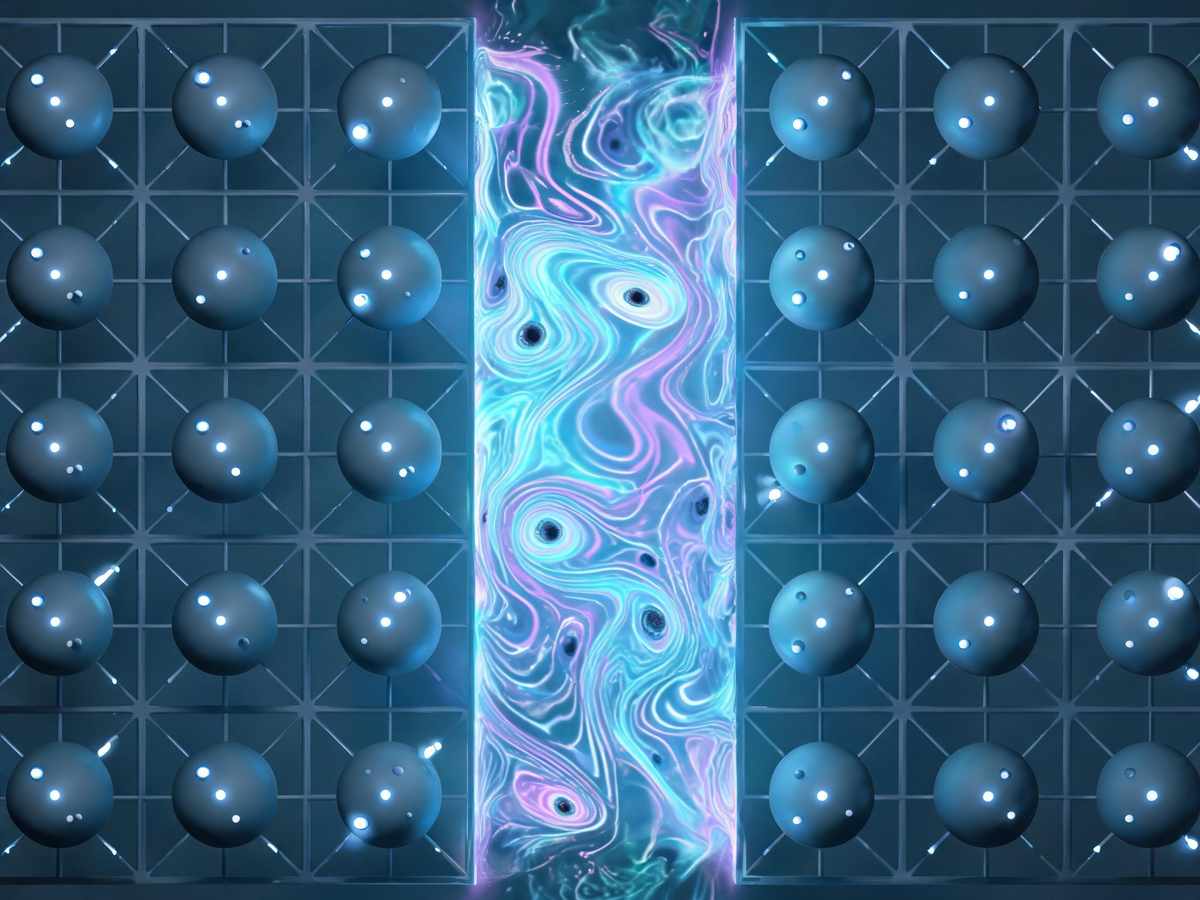
When Nothing Happens Is Actually Something: The Hidden Drama of Trivial Insulators
Two trivial insulators, each with displaced Wannier centers, host a conformal QED₃ state at their boundary where the energy gap closes.

When Swimming Helps You Disappear: How Marine Organisms Mask Their Scent
By stirring the water as they swim, marine organisms like fish can rapidly dilute their scent, becoming undetectable to distant predators.
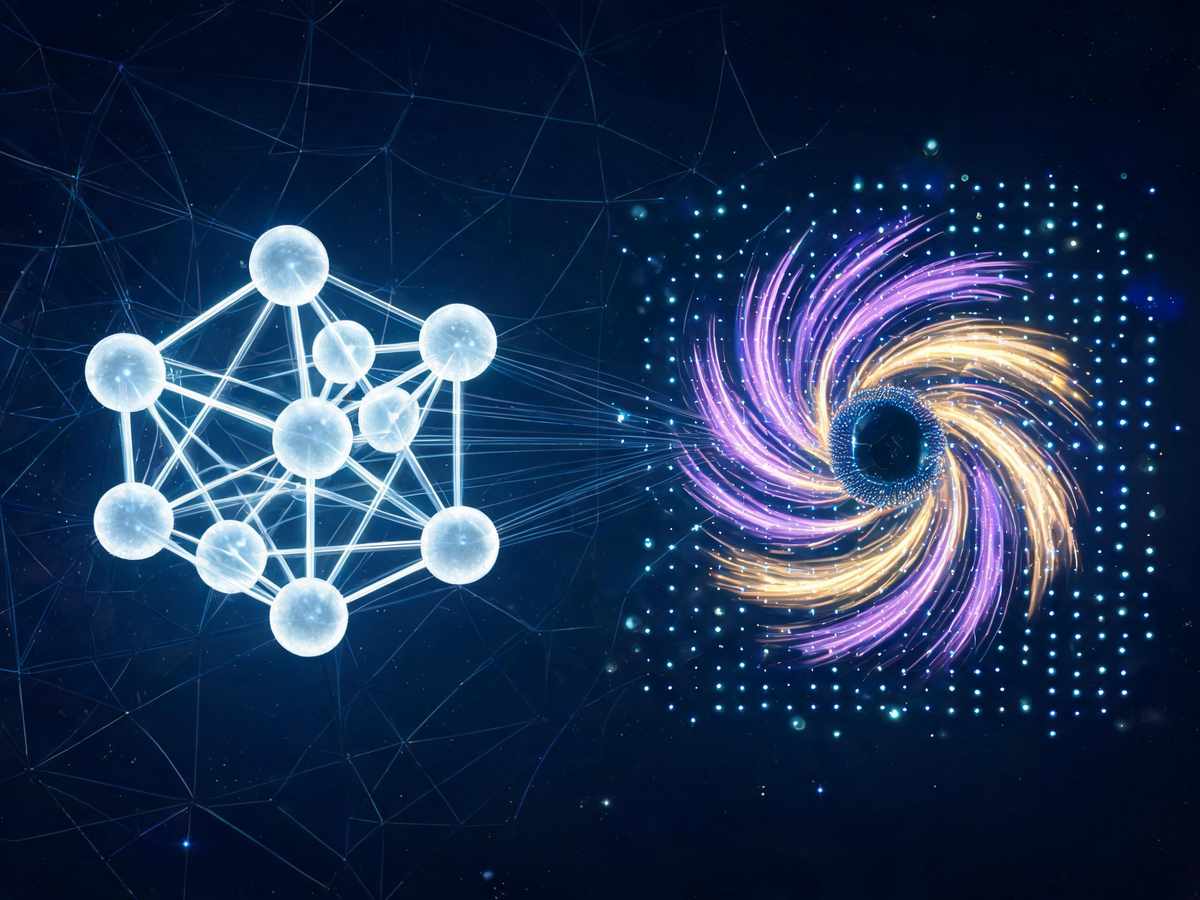
Spinning Out of the Blue: AI Finds Chiral Superconductivity
A self-attention neural network discovers chiral p+ip superconductivity by minimizing energy from raw electron coordinates, revealing emergent topological order.
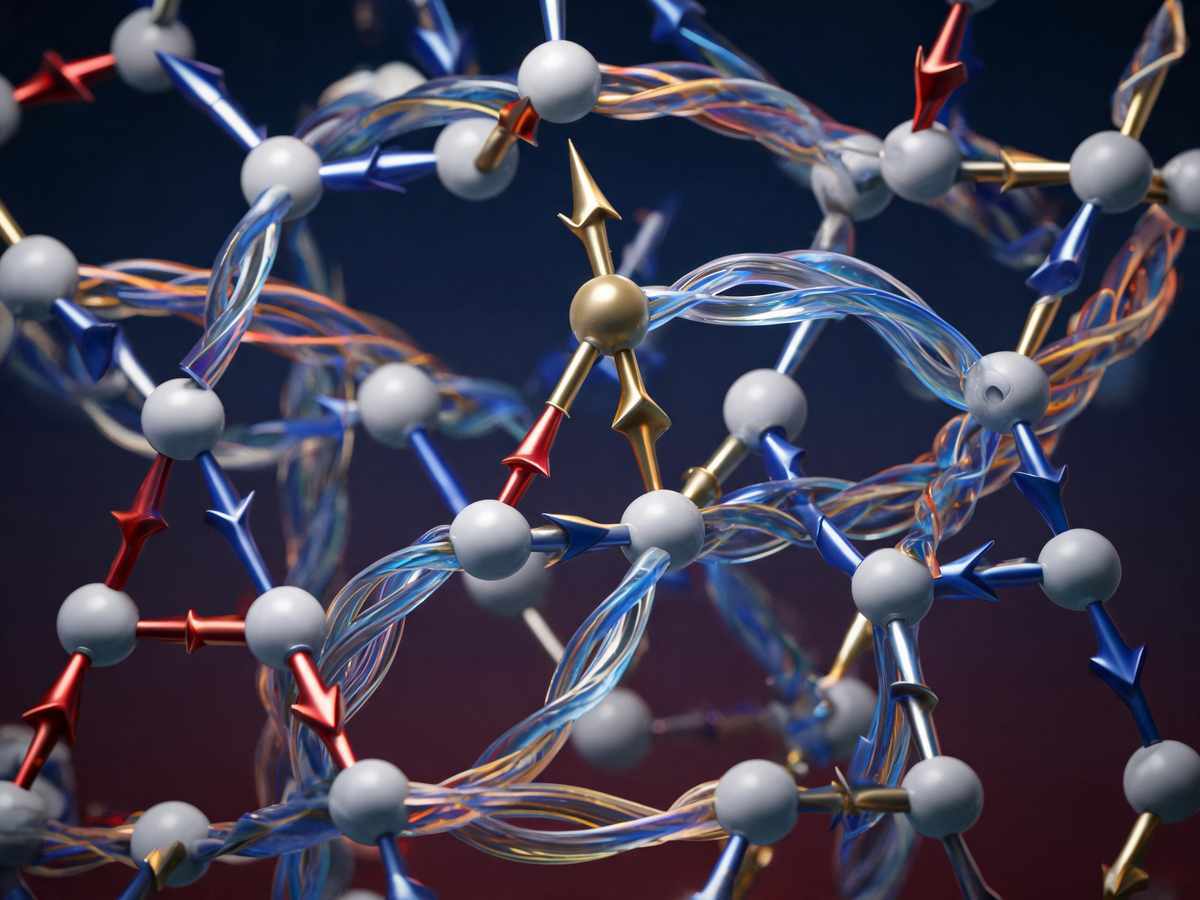
Weaving Superconductivity from Frustrated Spin Textures
Frustrated spin textures act as a quantum loom, weaving anisotropic d‑vector order that can generate vortices and diode effects.
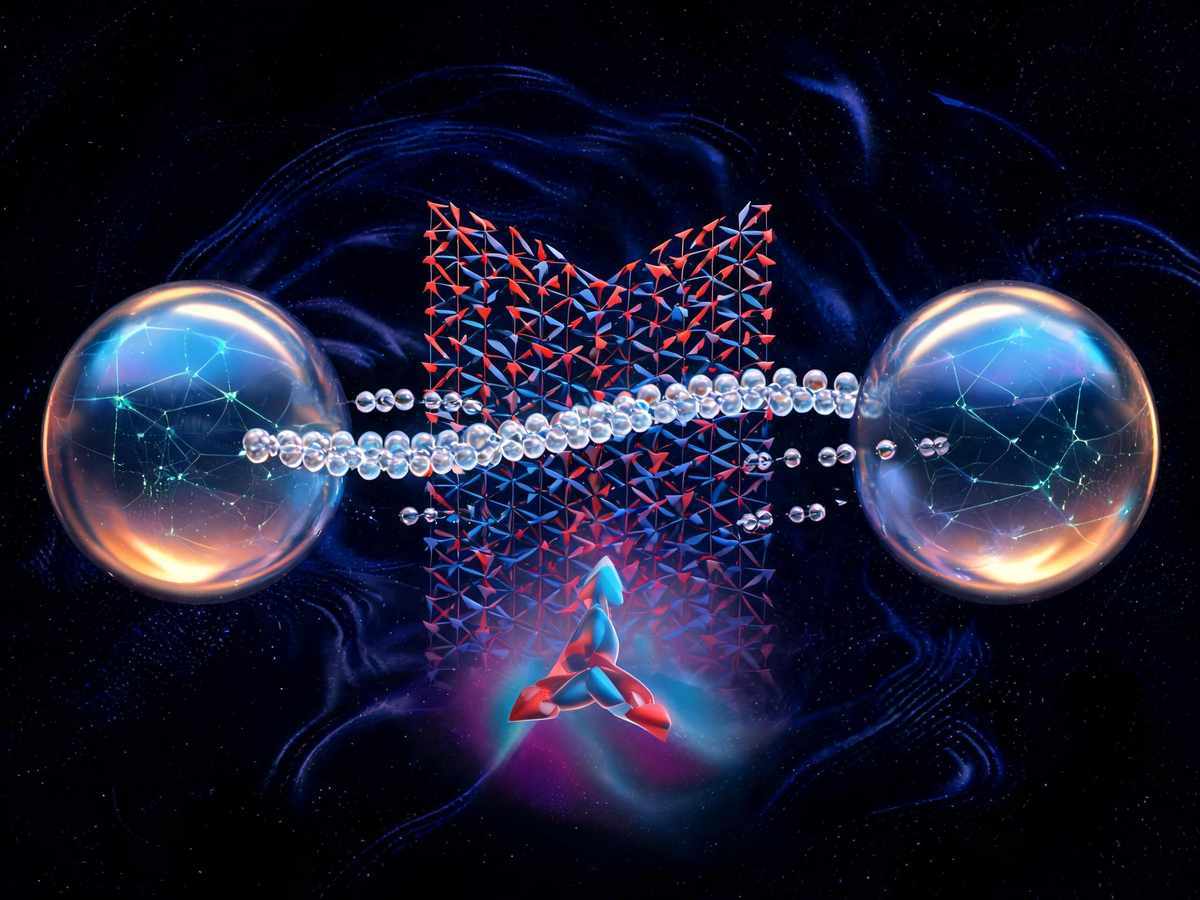
Learning to Steer Supercurrents with Frustrated Magnets
Frustrated magnetic spins in a Josephson junction create a supercurrent diode, favouring flow in one direction over the other.
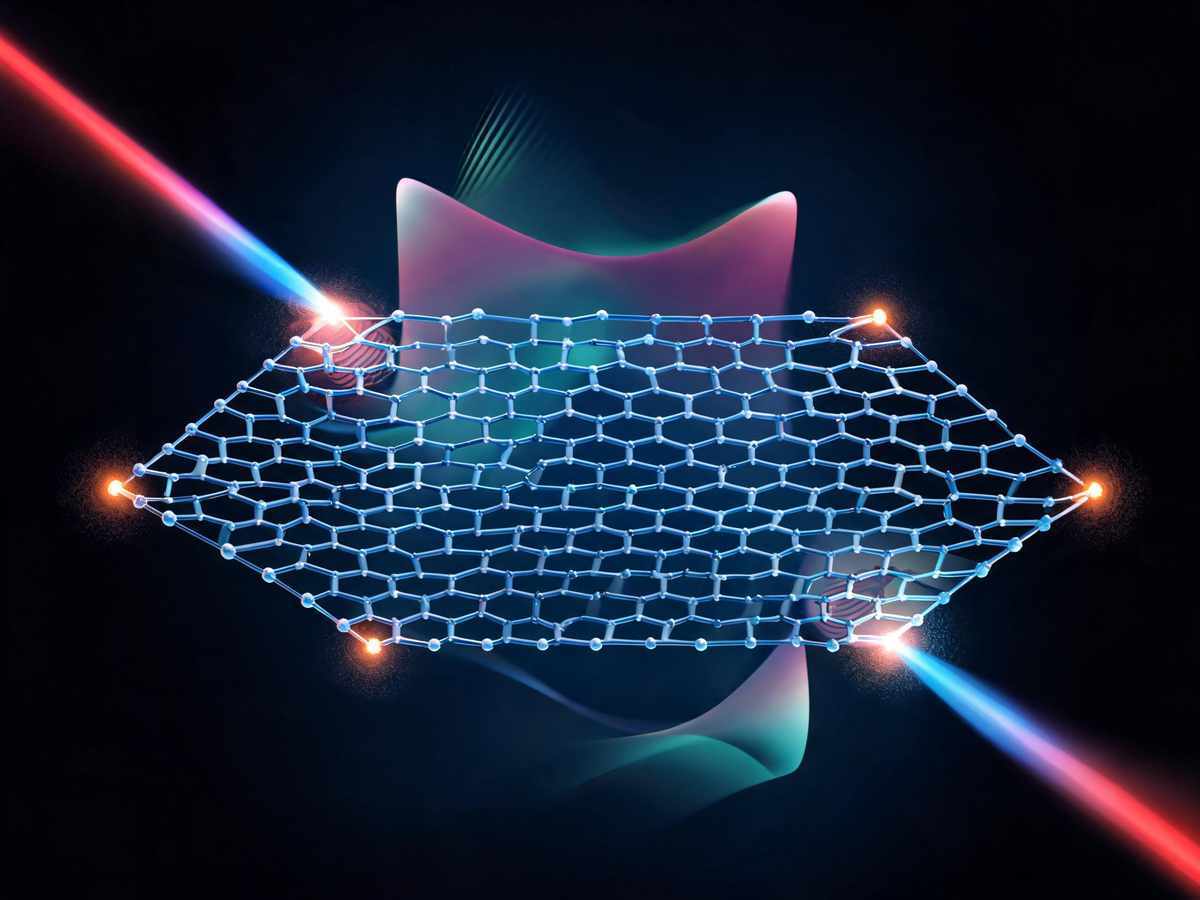
How Light Gives Graphene a Hidden Edge
Shining polarized light at an angle on strained graphene creates corner-bound electrons, a topological phase called a Floquet second-order insulator.
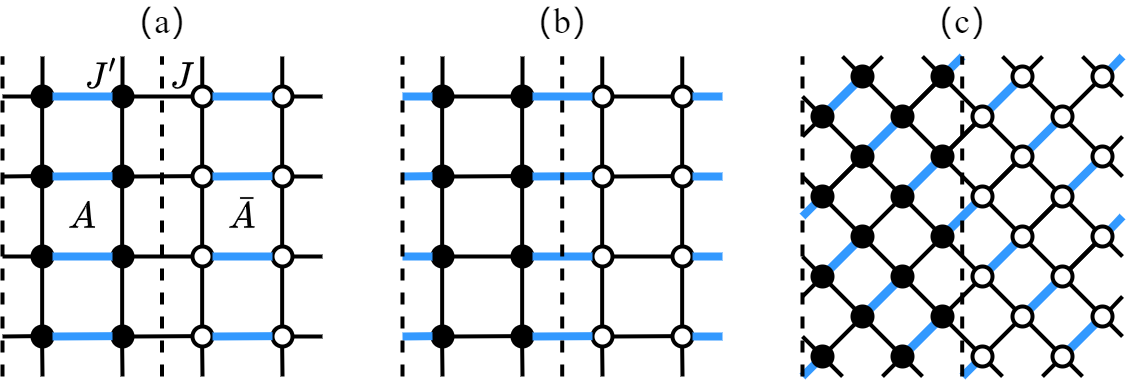
When a Cut Decides: Hidden Phases on Rényi Defects
Different entanglement cuts through a quantum critical point can host distinct surface universality classes, with an extraordinary cut developing spontaneous symmetry breaking.