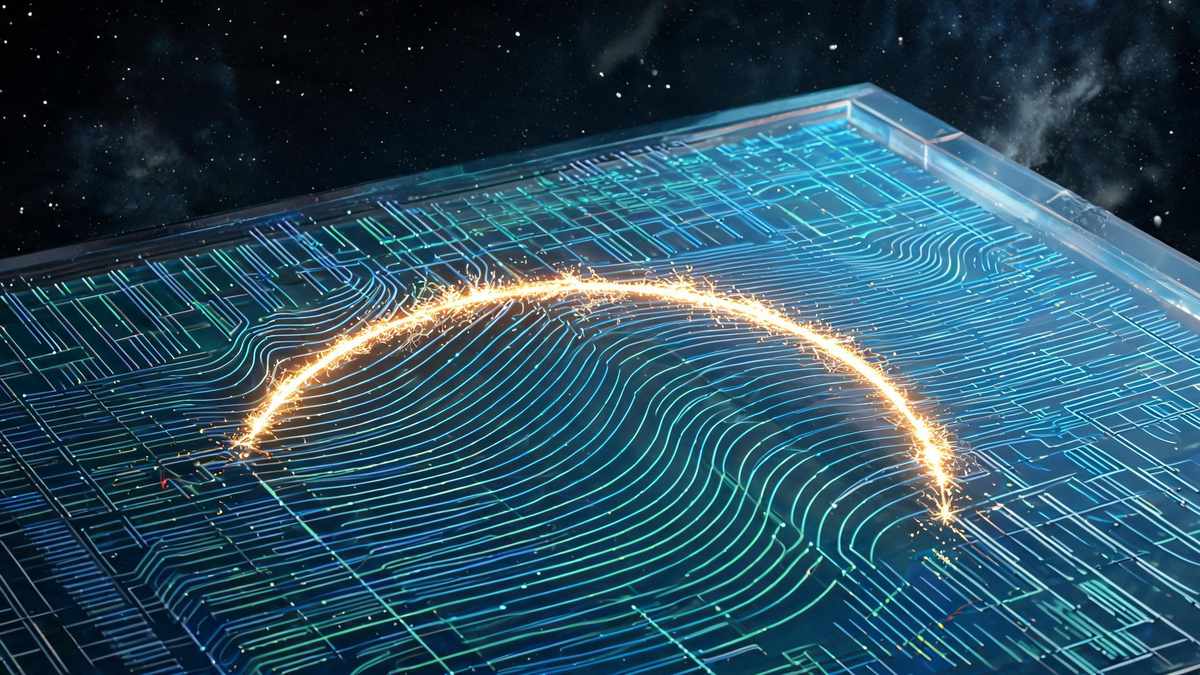
Light Caught Trembling in a Curved Spacetime on a Chip
A photonic chip emulates curved anti-de Sitter spacetime, where a light beam's geodesic sway and rapid Zitterbewegung trembling reveal Dirac dynamics in a fabricated geometry.
The Urysohn Machine: When Topology Becomes Arithmetic
Classification becomes the art of drawing geometric boundaries — walls that separate data regions in a metric space, with reusable frontiers that amortize the cost of learning.
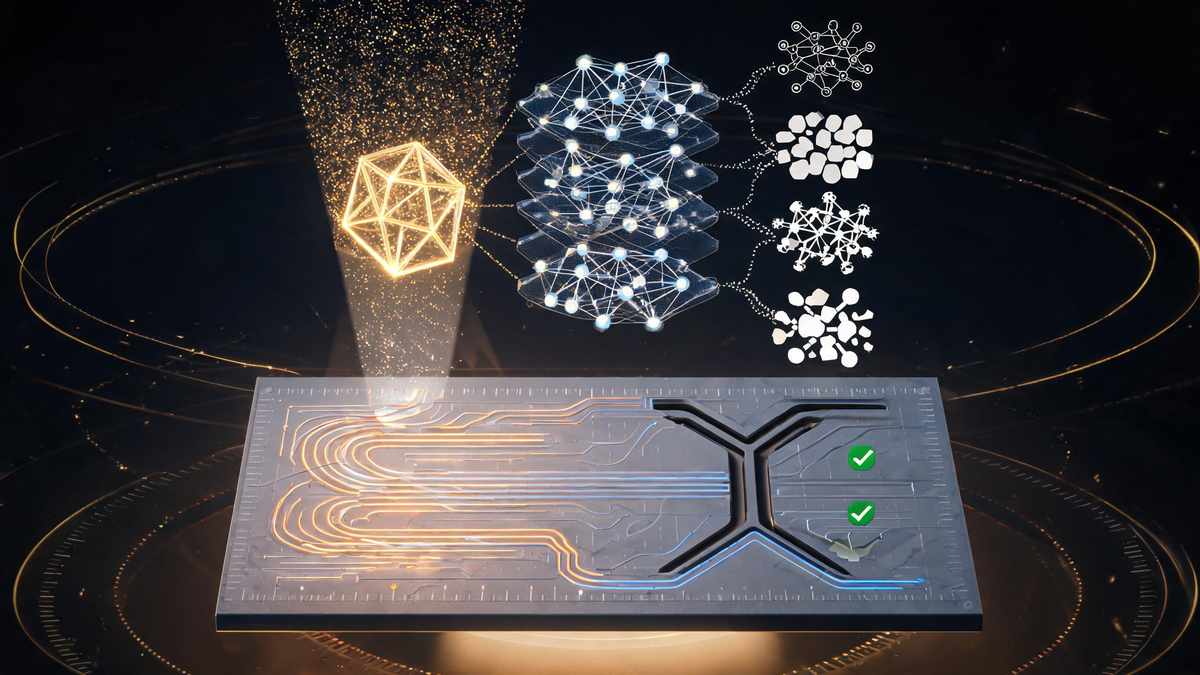
When Nanophotonics Learns to Obey the Rules
A learned generative manifold enforces nanophotonic design rules from the start, yielding manufacturable devices that match or exceed conventional performance with far lower computational cost.

Solving the Critical LYZ Equation: A Breakthrough in Kähler Geometry
A narrow ridge of critical phase in Kähler geometry is finally crossed, building a bridge of theorems across a degenerate slope.
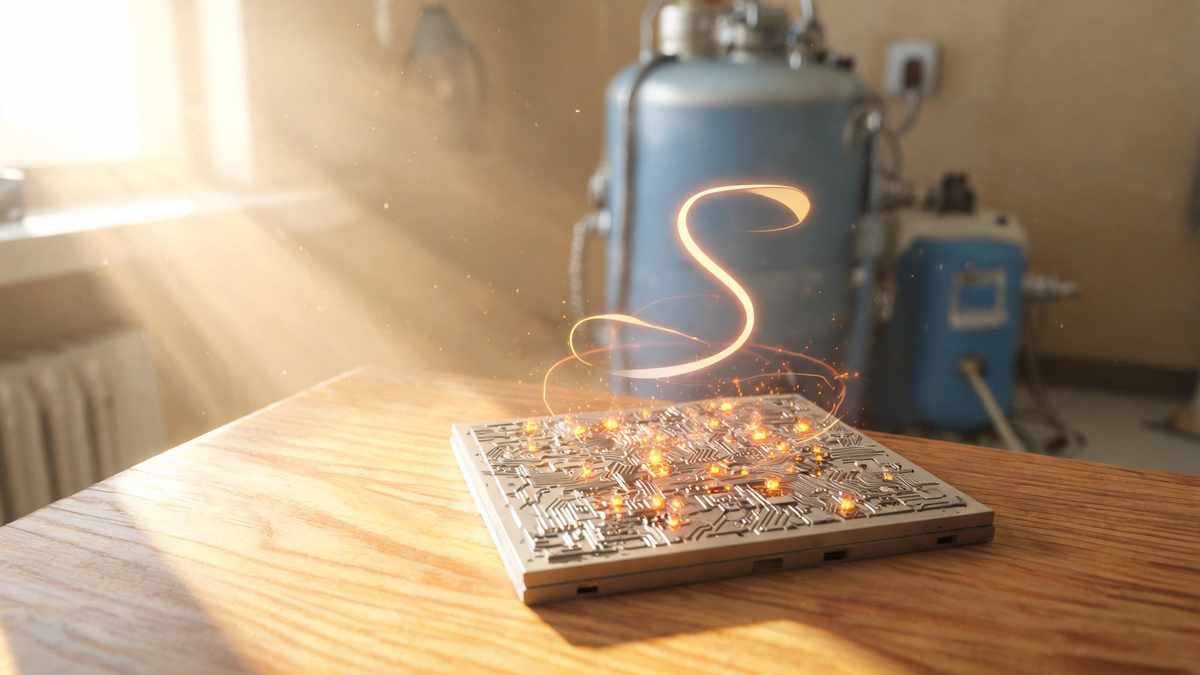
The Quantum Computer That Doesn't Need to Be Cold
Apollo, a 10,000-node processor built in standard CMOS, runs quantum-inspired optimization at room temperature using probabilistic p-qubits and genuine quantum entropy.
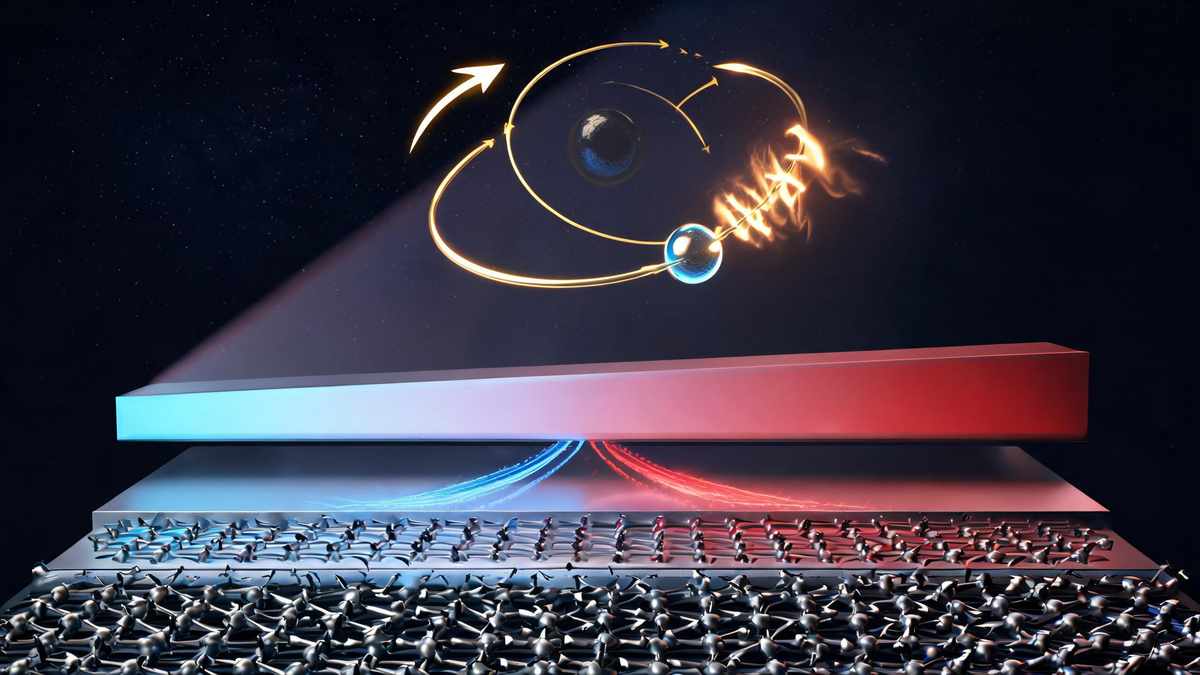
The Orbit That Moves Heat
Electrons' orbital angular momentum, not just spin, can carry heat, as shown by a wedge-shaped CuOx film revealing a new thermal messenger.

Unlocking Chaos with Two Quantum Copies
Two quantum copies probed via Bell measurement extract multi-point correlations from chaotic systems, achieving exponential advantage over classical methods.
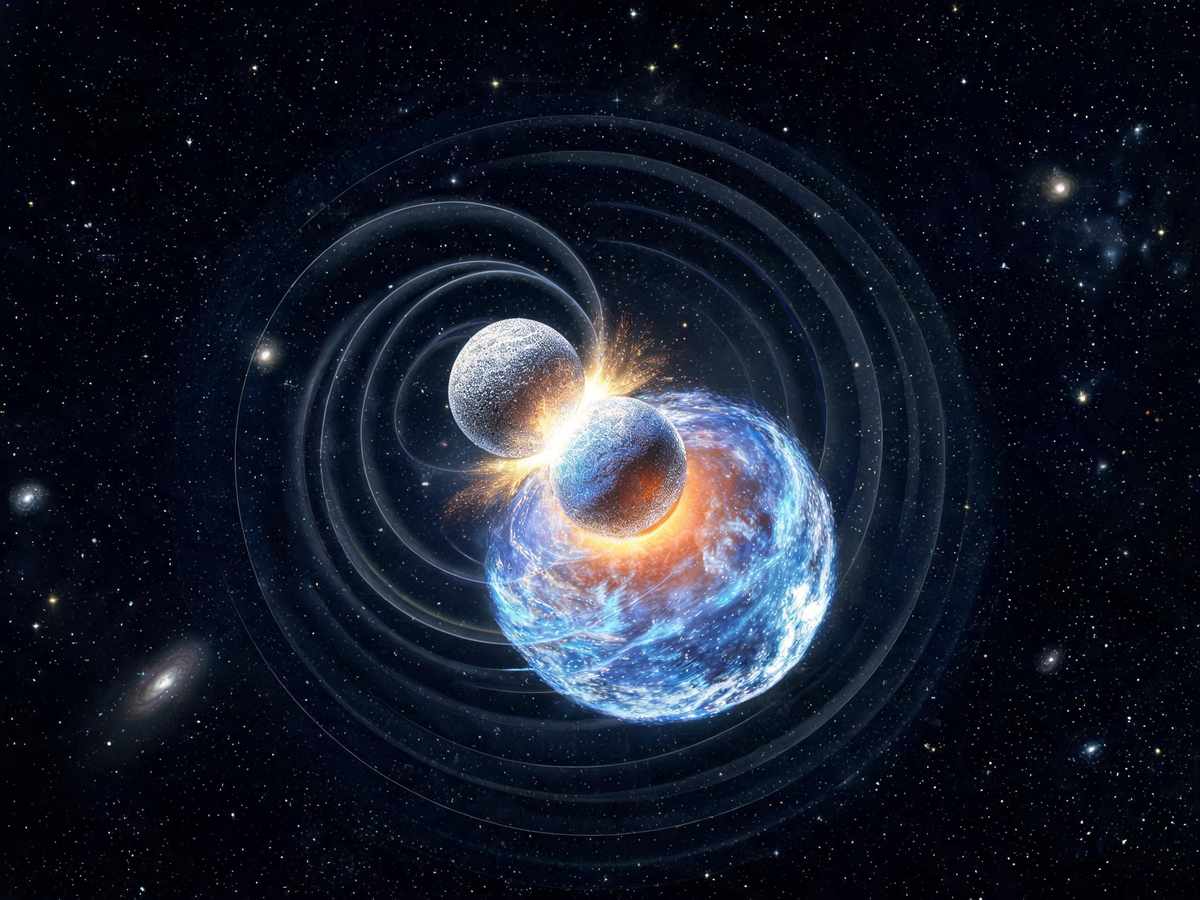
When Neutron Stars Collide: Listening for the Heart of Matter
Gravitational waves from merging neutron stars reveal hidden phase transitions inside their ultra-dense cores.
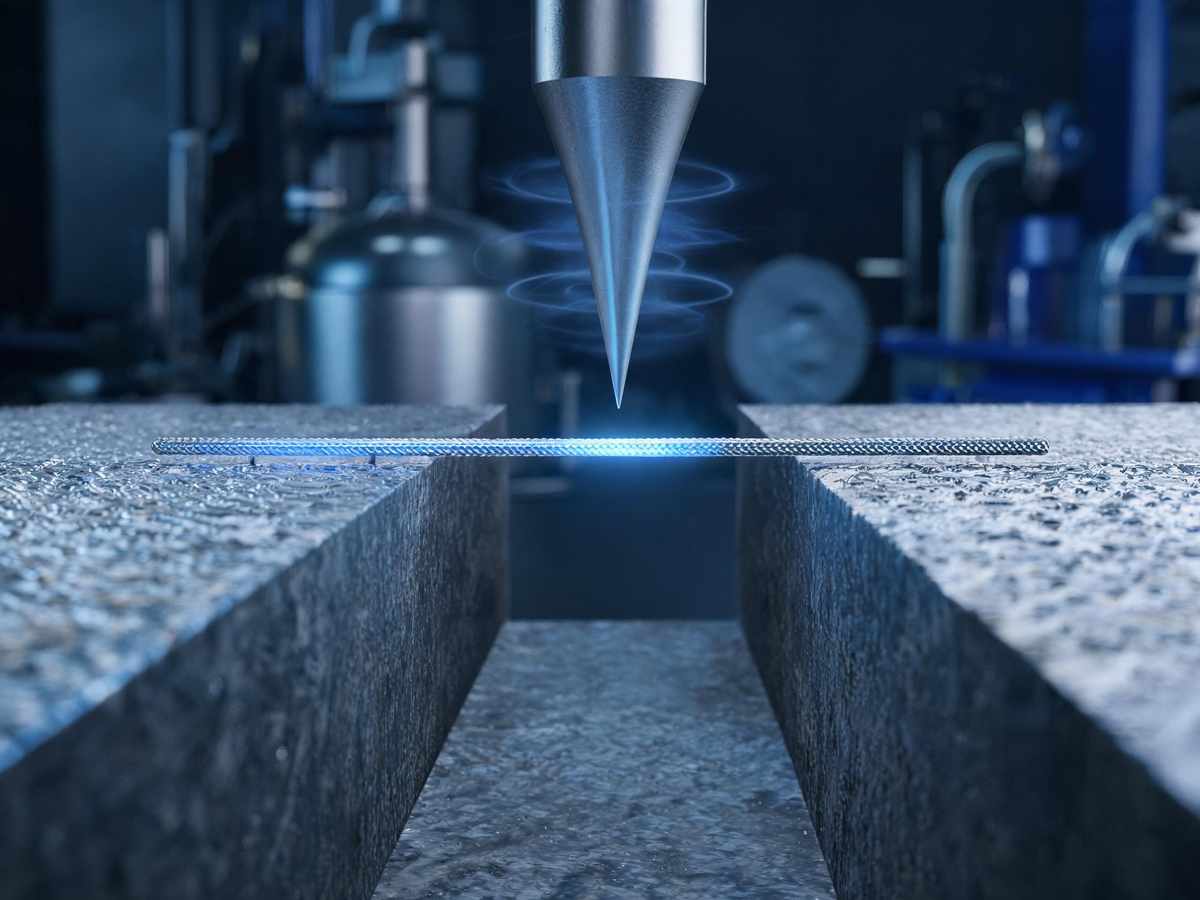
When a Carbon Nanotube Learns to Dance Quantum Mechanics
An atomic force microscope tip controls quantum vibrations in a carbon nanotube, enabling quantum state preparation and tomography without lasers.

Jamming's Missing Identity: How Parisi and an AI Found the Proof
A proof linking the gap and force exponents in jammed glass was found by Parisi and Zamponi, aided by an AI language model.
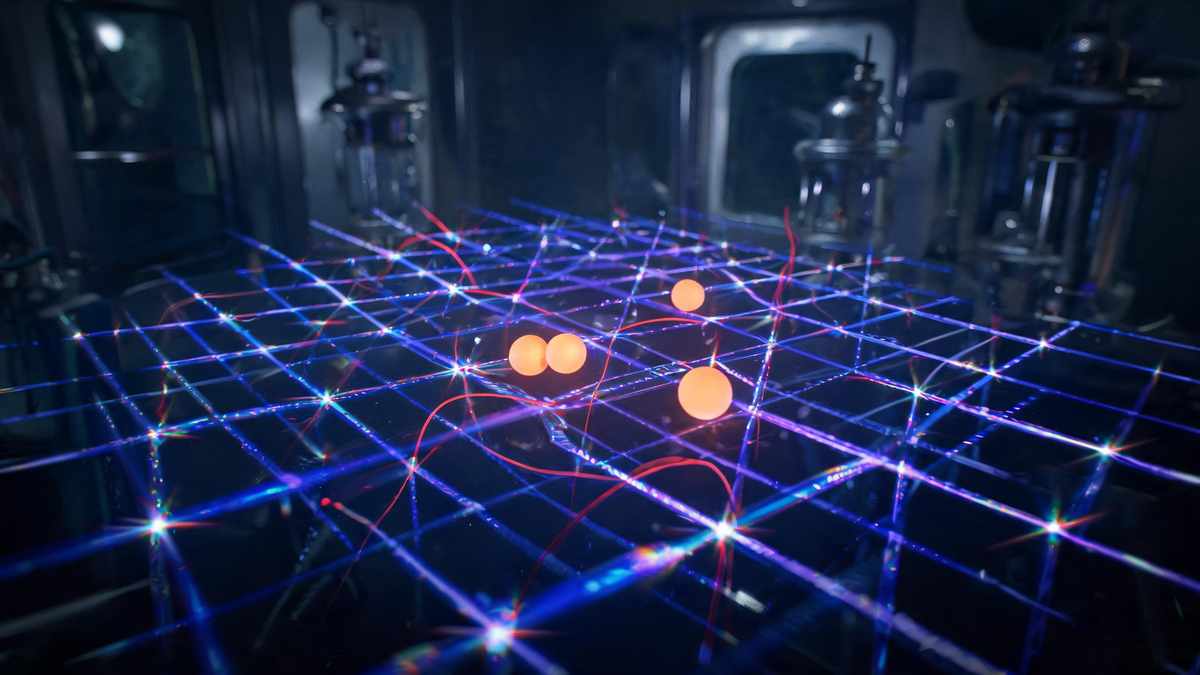
Building a Pfaffian State with Ultracold Rubidium Atoms
Three ultracold rubidium atoms in an optical lattice form a Pfaffian quantum Hall state, a long-sought topological phase that could enable fault-tolerant quantum computation.

Quantum Tidal Locking: When a Cloud of Atoms Spins in Sync
A Bose-Einstein condensate spontaneously synchronizes its internal rotation with its orbital motion, demonstrating quantum tidal locking on a microscopic scale.

When an Ice Piston Slams into a Canyon
A building-sized ice piston, formed by explosive ice splintering in a thunderstorm, slams into a canyon floor, leaving a clean bedrock scar.

Evolution Learning to Wait: The Inverse-Time Law of Recovery
Post-catastrophe evolution obeys an inverse-time law, with fitness recovery rate set by the number of independent traits under selection.

Learning Without Local Minima: Gauge Freedom Makes Matrix Product States Trainable
Gauge freedom in matrix product states creates a smooth energy landscape, eliminating poor local minima and enabling reliable quantum training.

When Topology Learns to Dance: A Quantum Walk Through the Shape of Data
A quantum walker dances through a simplicial complex, using coherent interference to reveal hidden topological holes in high-dimensional data.
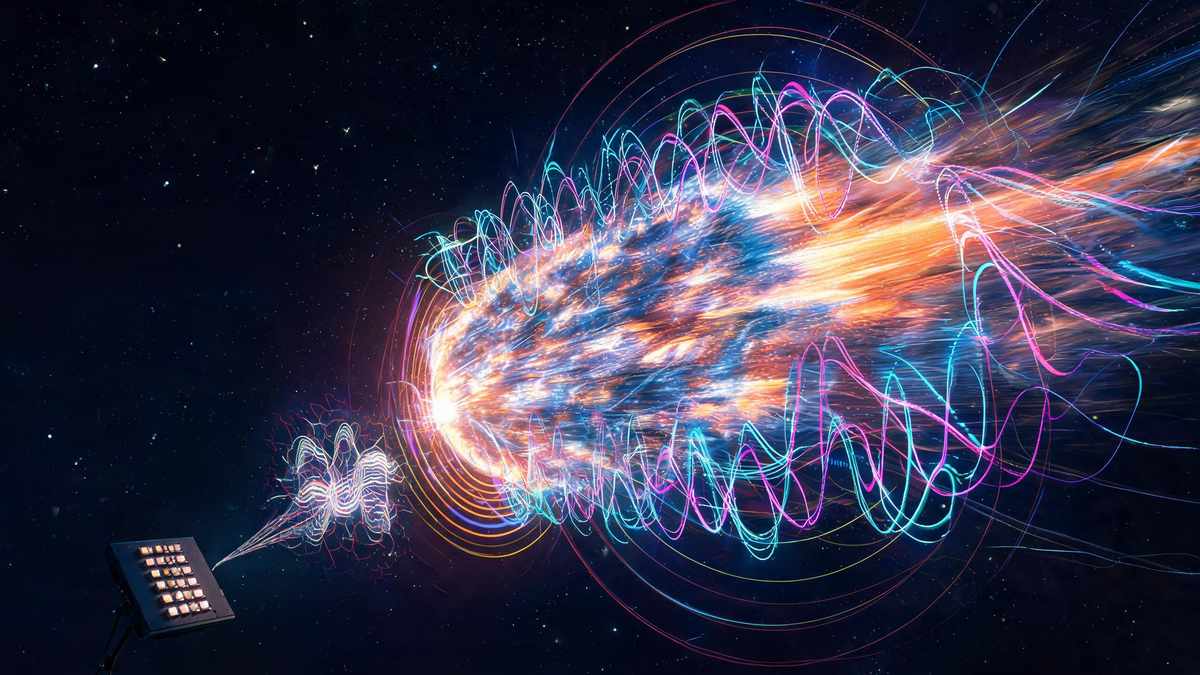
Reconstructing the Four‑Vector of Heat from Noise Alone
Electromagnetic noise from a moving hot plasma, decoded via cross-spectral ratios, reveals both rest-frame temperature and drift velocity as a true four-vector.
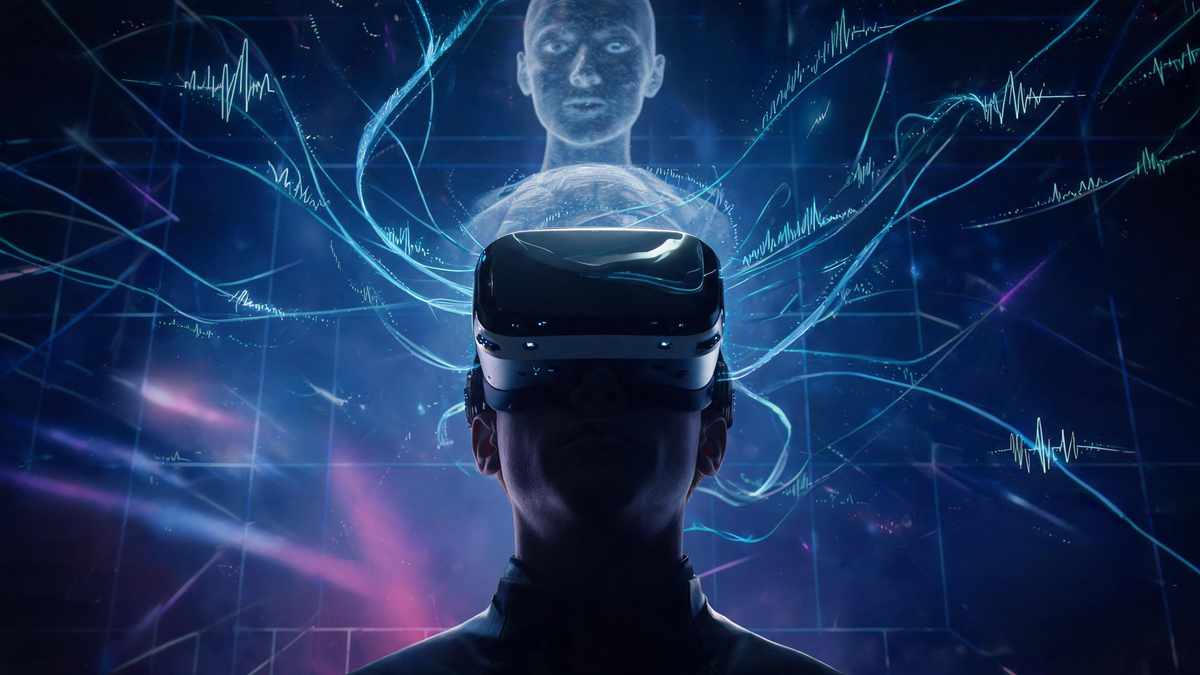
Can a VR Accelerometer Really Read Your Mind?
Commercial VR sensors pick up tiny pupil-induced vibrations, allowing machine learning to reconstruct what a user sees — a new privacy vulnerability.

Eavesdropping on Water’s Heavy Twin in a Distant Disk
For the first time, semi-heavy water ice is detected in a planet-forming disk, revealing a crucial chapter in water's cosmic journey.
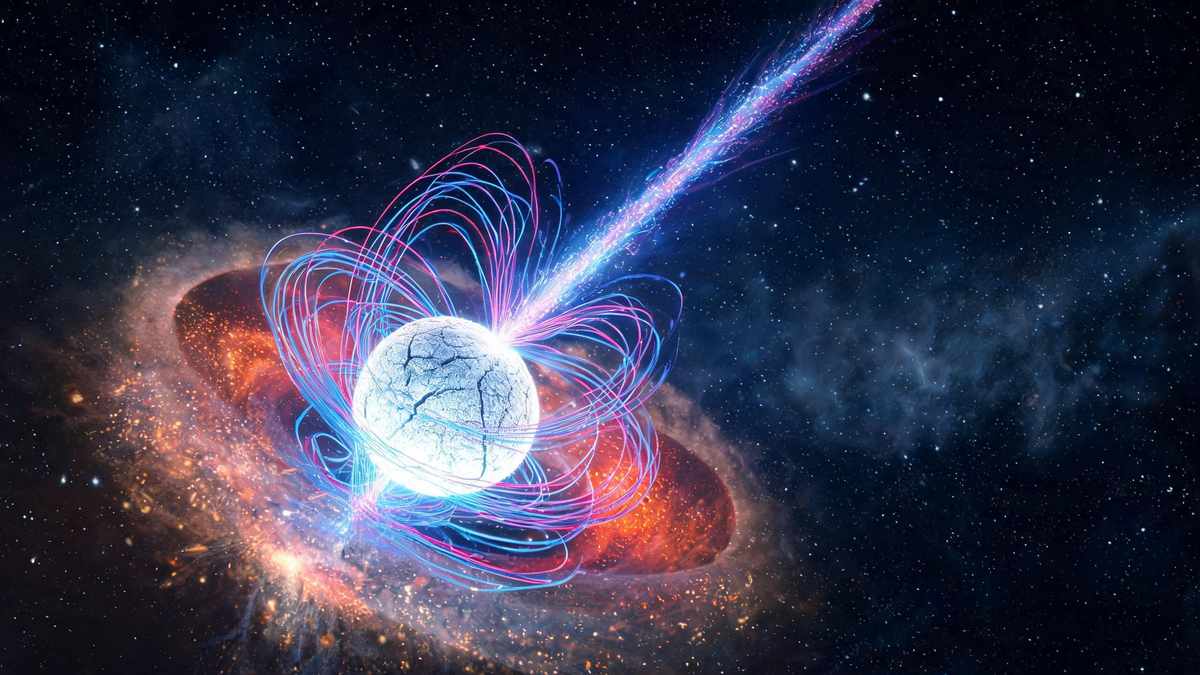
A White Dwarf's Final Breath: Forging the Heaviest Elements
A magnetized white dwarf collapses into a neutron star, ejecting neutron-rich material that forges heavy elements like gold and uranium in a kilonova-like event.
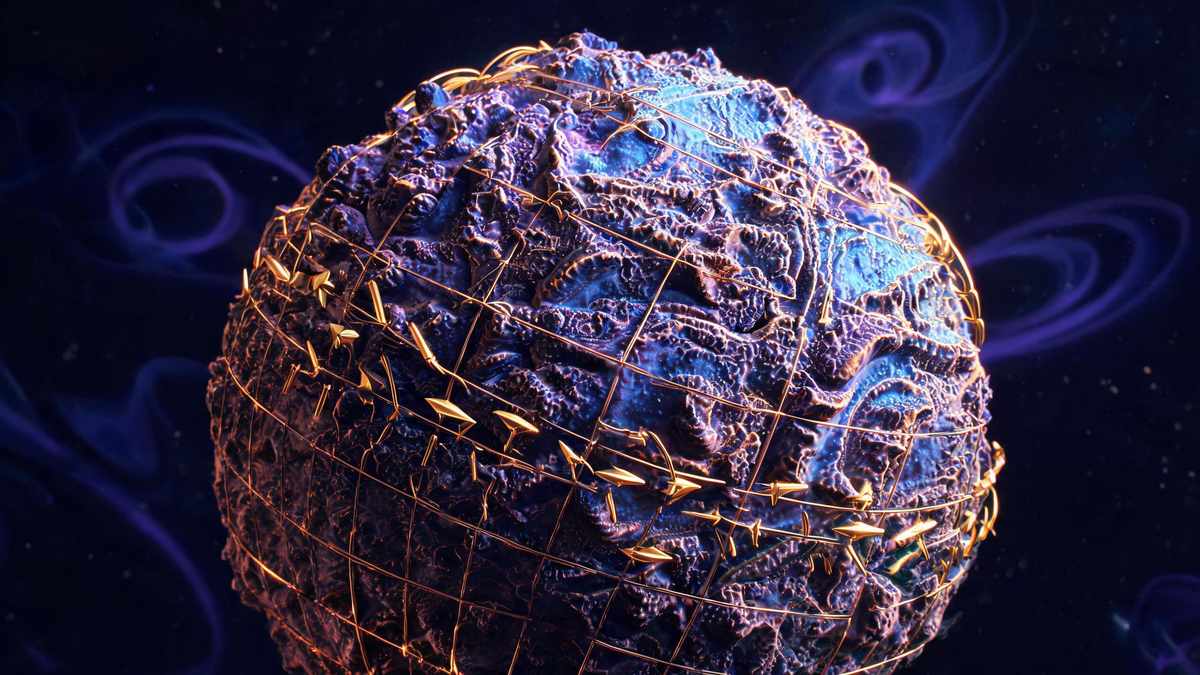
The Random Fractal That Cannot Be Warped: Brownian Sphere's Quasisymmetric Rigidity
The Brownian sphere, a canonical random fractal surface, is quasisymmetrically rigid — it cannot be nontrivially deformed into itself, a result proven by Miller and Tian.

The Shape That Refused to Simplify: How a Tiny Matroid Brought Down a 25‑Year‑Old Conjecture
The Fano matroid's base polytope refuses all regular unimodular flag triangulations, toppling the 2002 Herzog-Hibi conjecture.

When FP8 Storms the Holy Grail of Precision
A position paper demonstrates that FP8 tensor cores, with a mathematical trick based on the Chinese Remainder Theorem, can fully emulate double-precision accuracy for HPC simulations.

How Noise Taught Quantum Computers to Tame Turbulence
By injecting noise into turbulent dynamics, a new quantum algorithm transforms exponential complexity into logarithmic cost, turning randomness into a computational resource.
Cracking the Code of Symmetry-Enriched Topological Order
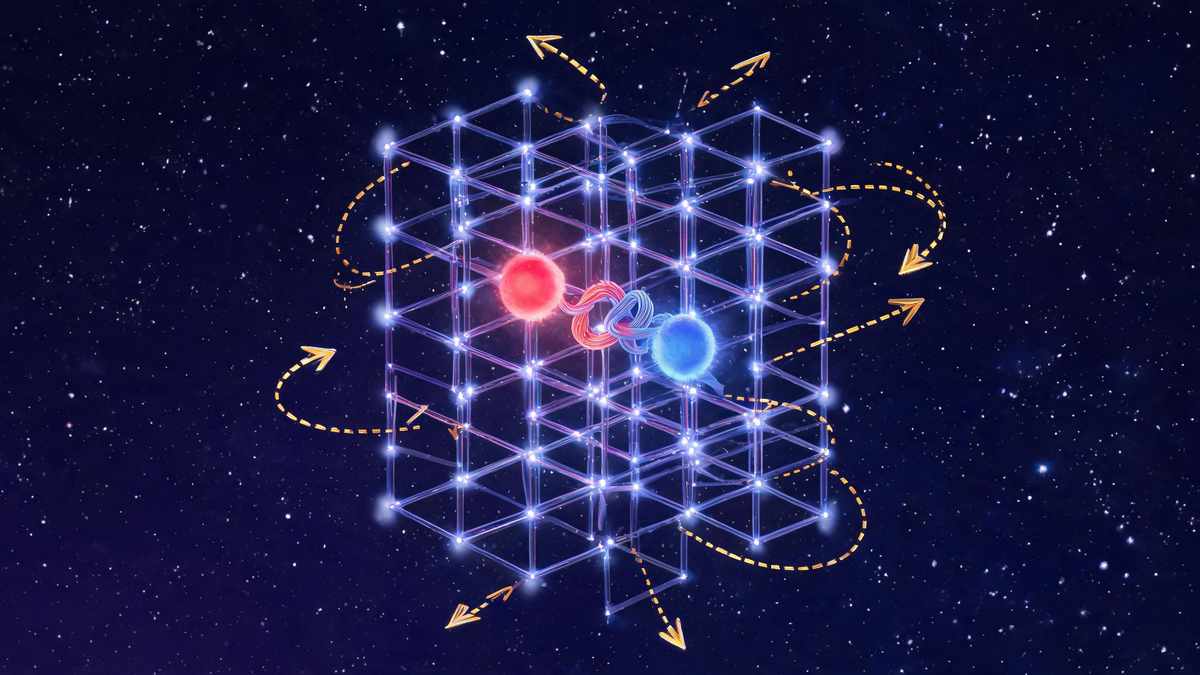
A universal grammar for symmetry-enriched topological order maps anyon braiding and symmetry actions to a complete set of rules for quantum spin liquids.

When the Universe’s Symmetry Splinters: A Quantum Gravity Path to Dark Energy
Perfect symmetry splinters into fragments of Hilbert space, leaving an accelerating cosmos as a residual quantum echo.
Agents in the Labyrinth: Unlocking a Faster Nuclear Future
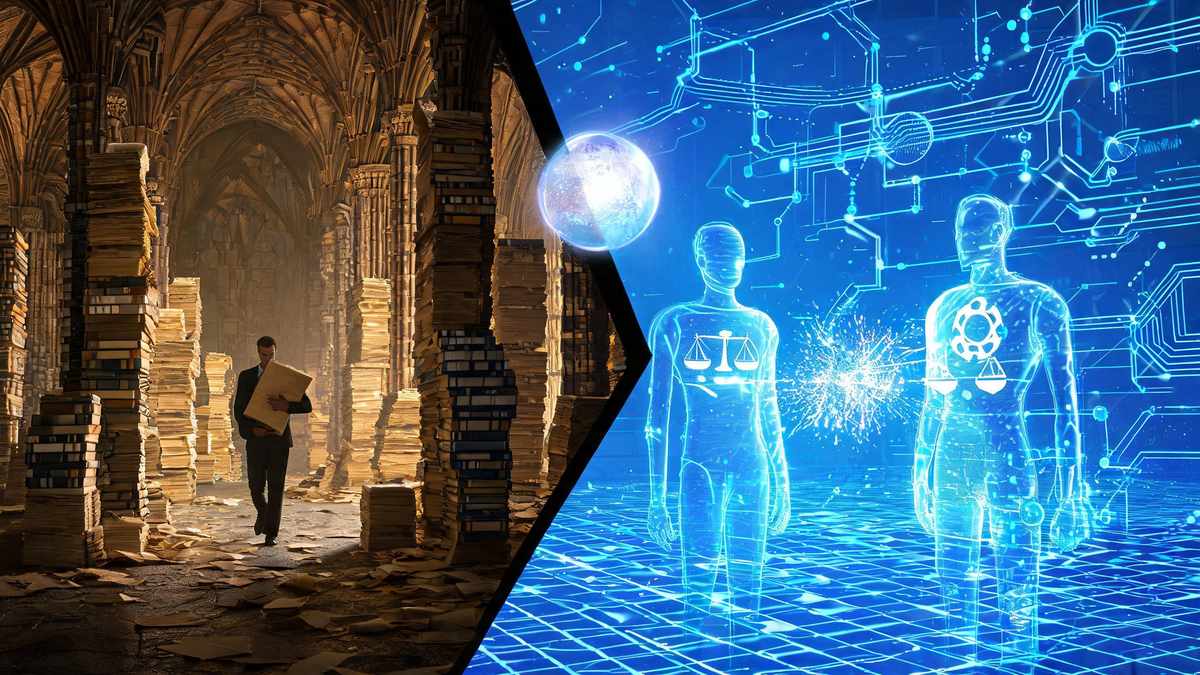
AI agents navigate a regulatory labyrinth of paperwork, cutting nuclear reactor licensing from years to months while preserving safety oversight.
When Algebraic Geometry Learns Quantum Groups: Cohomological Hall Algebras and Yangians
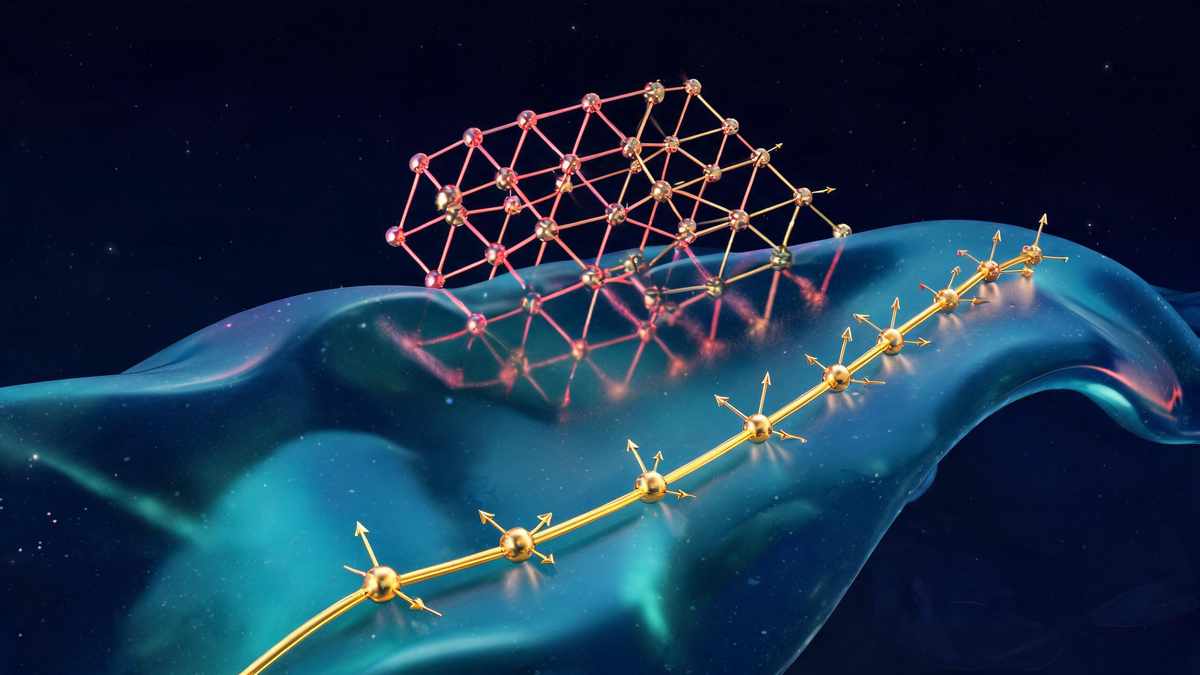
The cohomological Hall algebra of a smooth surface with a curve is isomorphic to the positive half of the affine Yangian, linking geometry and quantum symmetry.
From Pixels to Newtons: Learning Force Without Physics
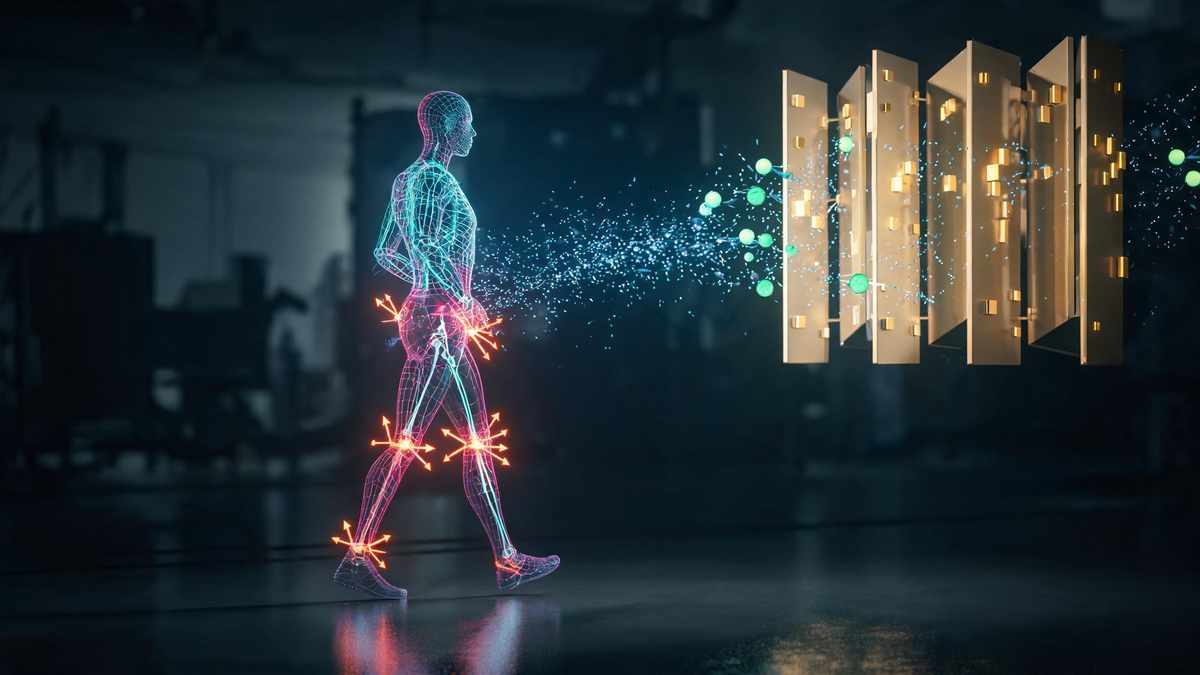
A transformer predicts three-dimensional hip and knee contact forces from a single monocular video, matching physics-based models without modeling muscles or Newton's laws.
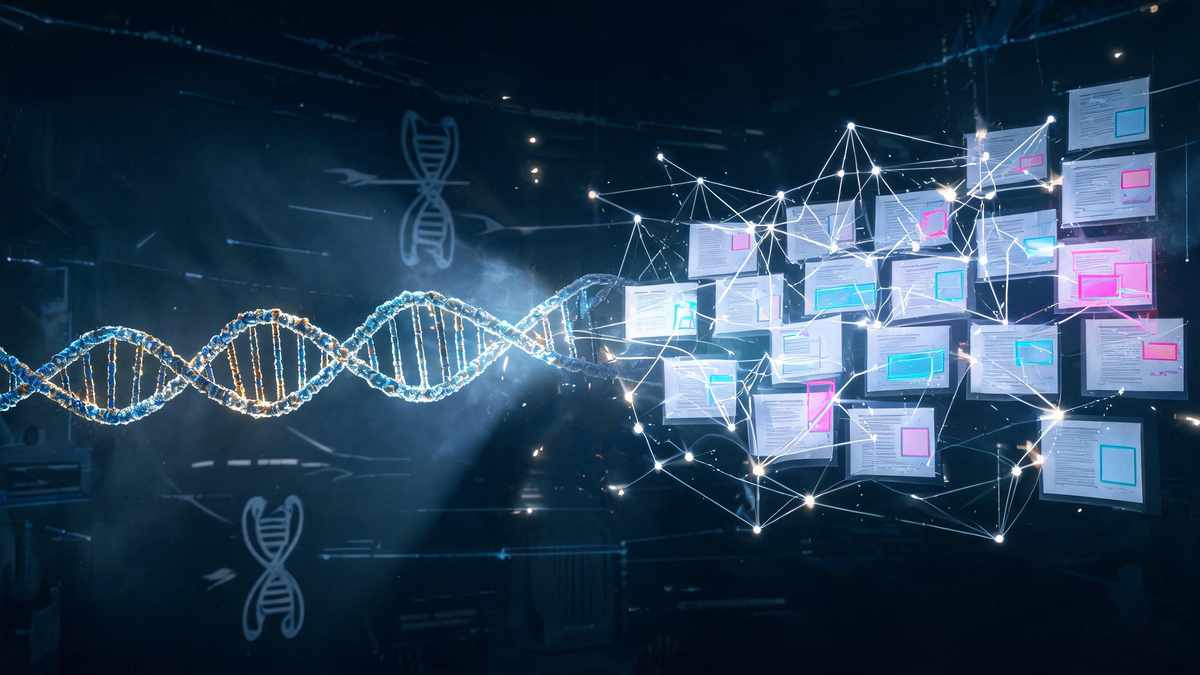
Reading Genomes as Documents: An OCR Approach to DNA Understanding
A vision-language model reads DNA as an OCR-processed document, compressing genomic information into visual tokens for efficient, layout-aware analysis.