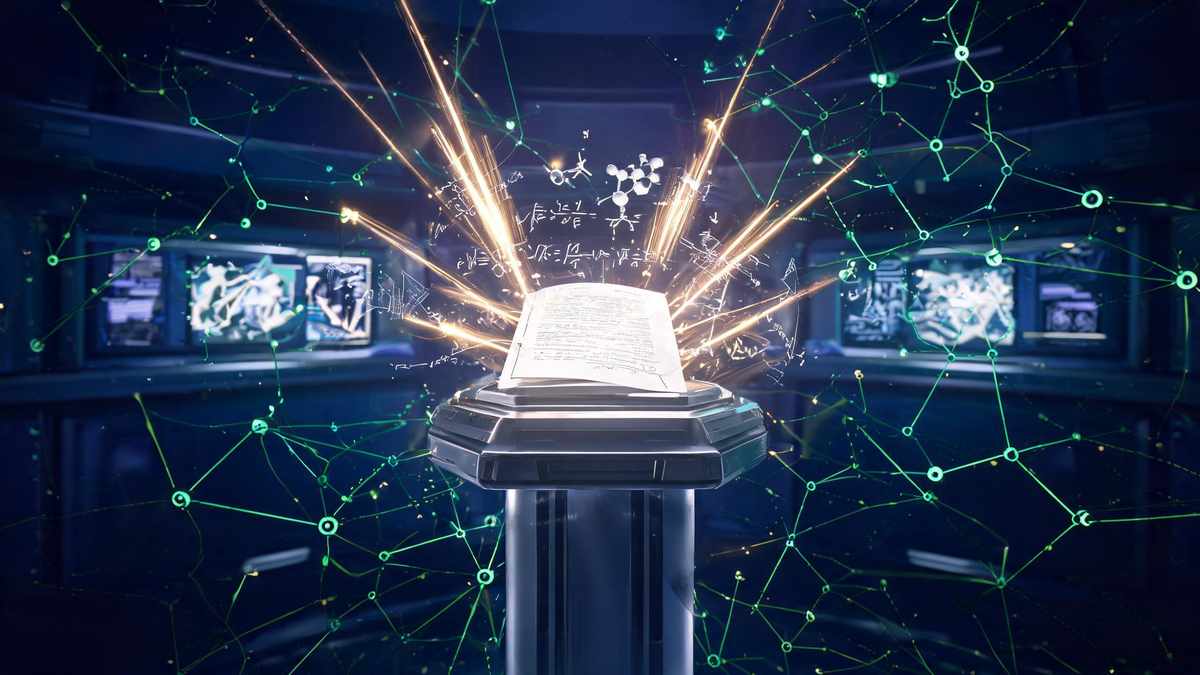
When Critics Are Right: Demanding Review Predicts Higher Impact
Papers that withstand the most demanding peer review, with strong, high-quality critiques, later earn significantly higher citations, challenging the view of review as mere gatekeeping.
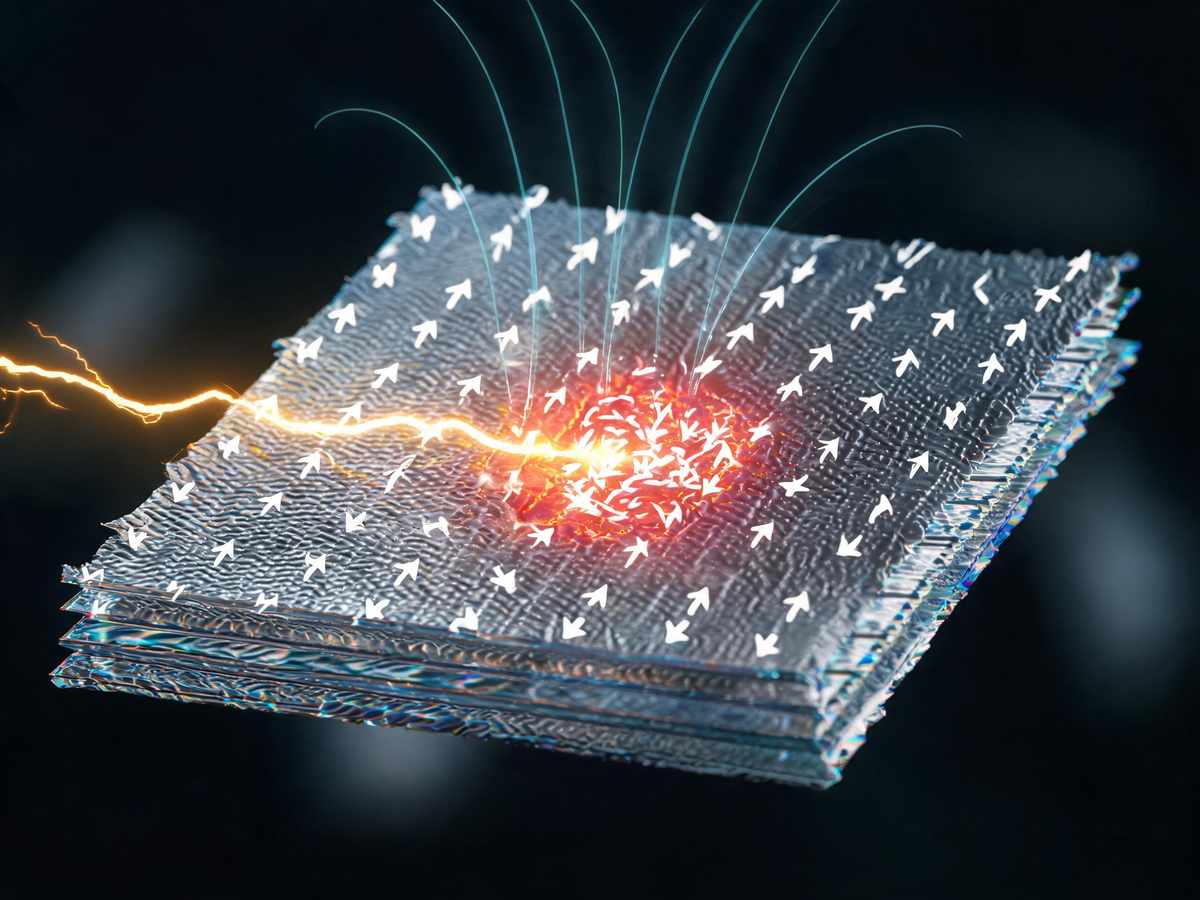
When a Current Pulse Teaches a Magnet to Forget
A current pulse heats a 2D magnet above its Curie temperature, letting a weak magnetic field rewrite its magnetization without lasers.
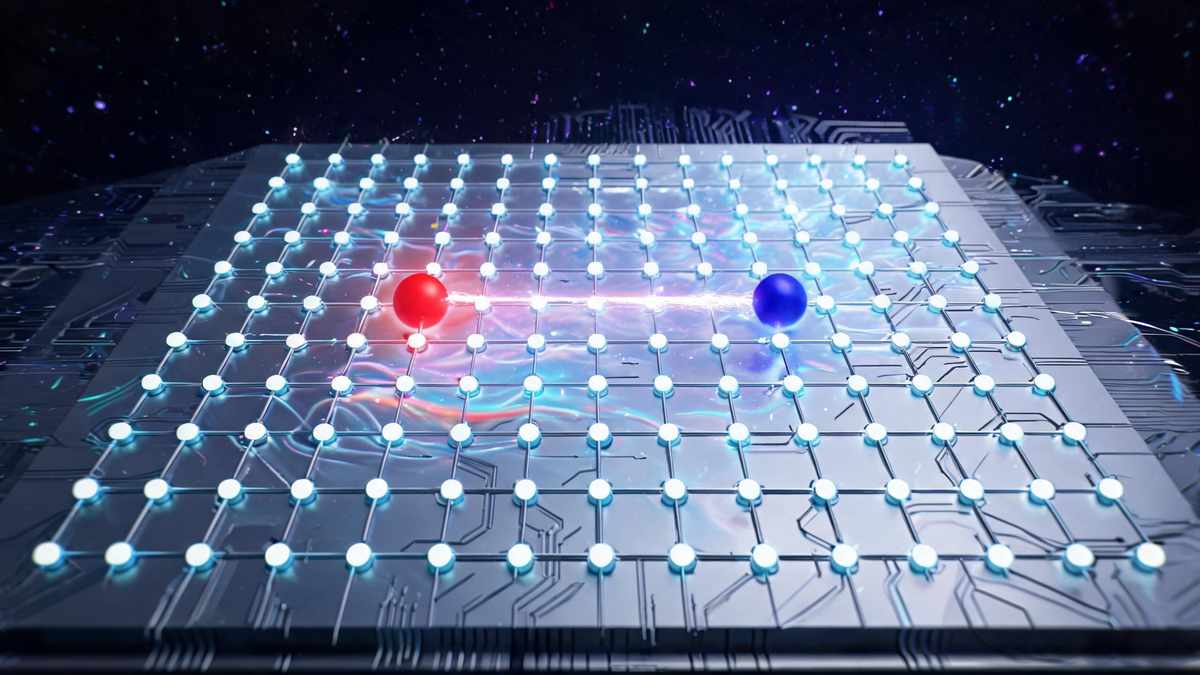
The Wolf That Wasn’t? Quantum Spin Ice on a Superconducting Chip
Magnetic monopoles in artificial spin ice on a superconducting qubit array display super-diffusive motion, hinting at quantum coherence beyond classical diffusion.

How Prebiotic Magnets Made Life Choose a Hand
Prebiotic magnetite crystals with swirling vortex magnetic domains could have amplified chiral bias via spin-selective electron transfer, steering life toward homochirality.
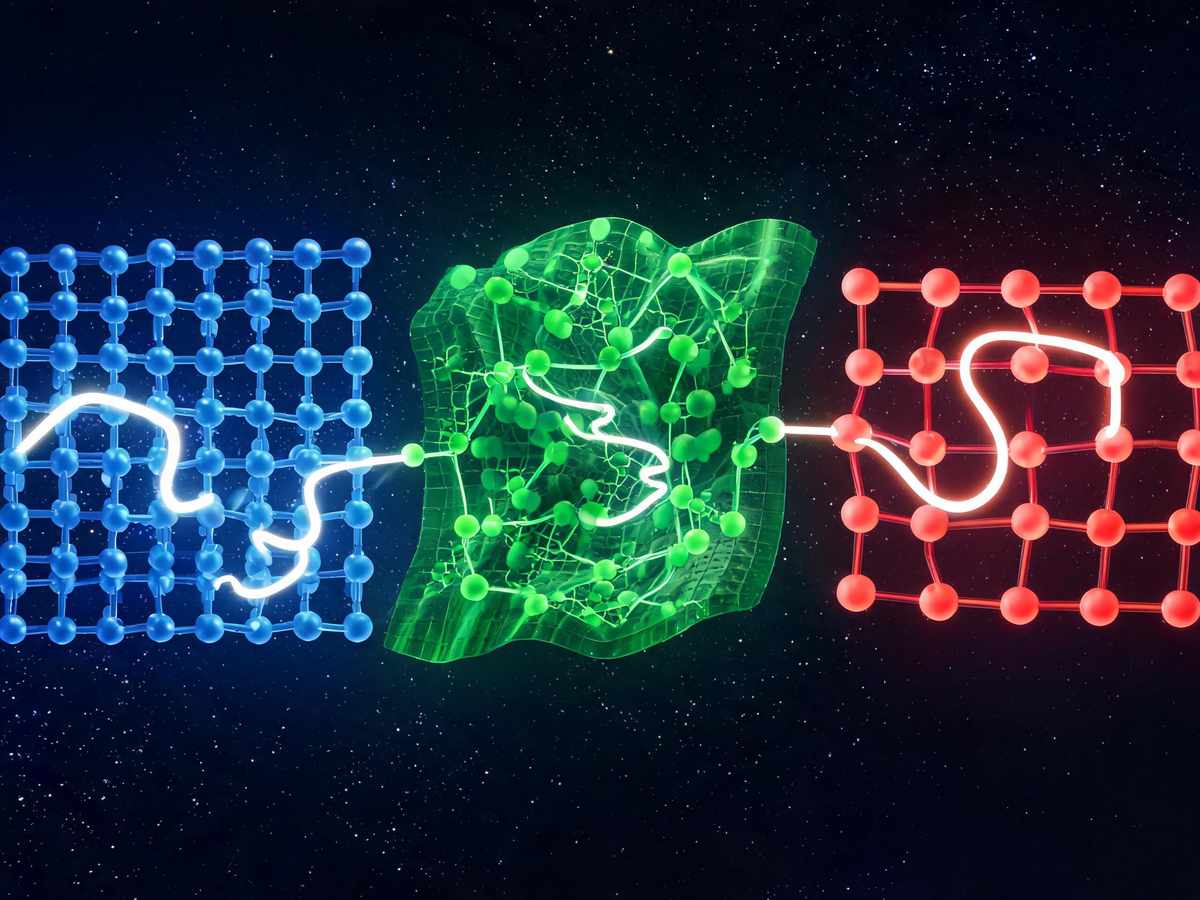
The Invisible Dimension that Decides Spin Squeezing
The spectral dimension of a spin network's connectivity decides whether scalable quantum squeezing can emerge.
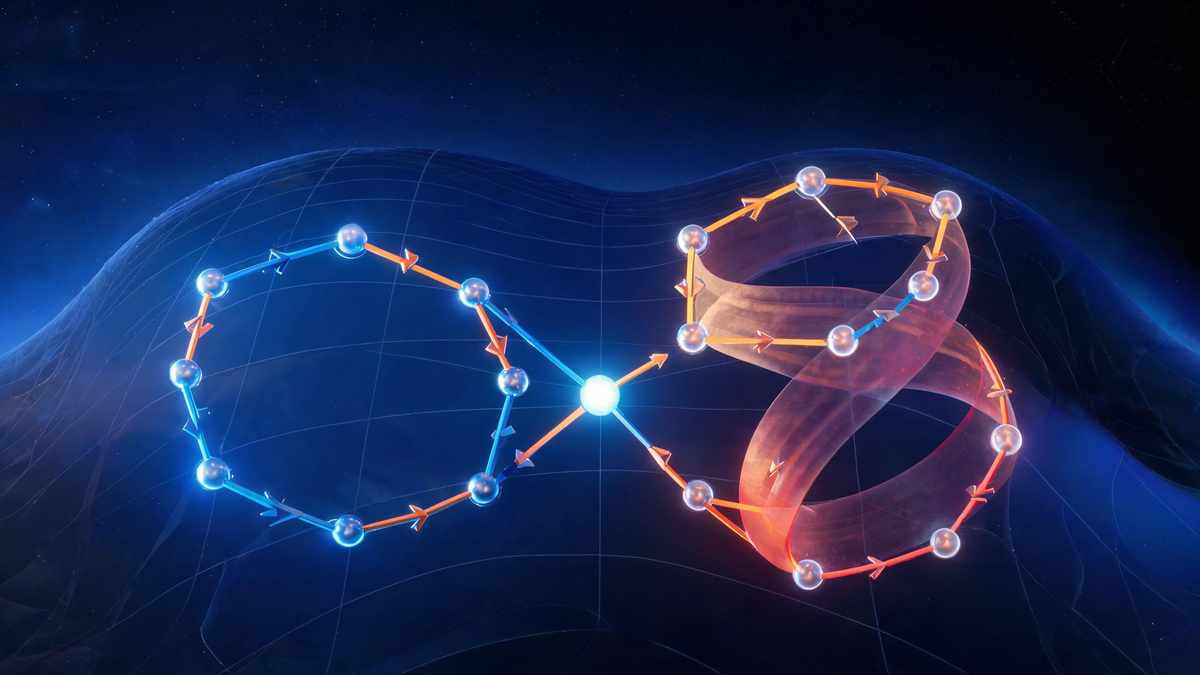
How Holonomy Decides When a Spectrum Stays Real
A single shift in particle number flips the holonomy on the Krylov graph, determining whether the energy spectrum remains real or becomes complex.

Learning to Hand Off: A Provably Convergent Theory for Multi-Agent Workflows
Two AI agents coordinate through an interface-constrained handoff, communicating a single learned scalar to guarantee convergent multi-agent workflows.

Venus's Thick CO₂ Atmosphere: A Cosmic Mystery That Refuses to Be Solved
Three different planetary histories can each produce Venus's thick CO₂ atmosphere, challenging the idea that it once had oceans.
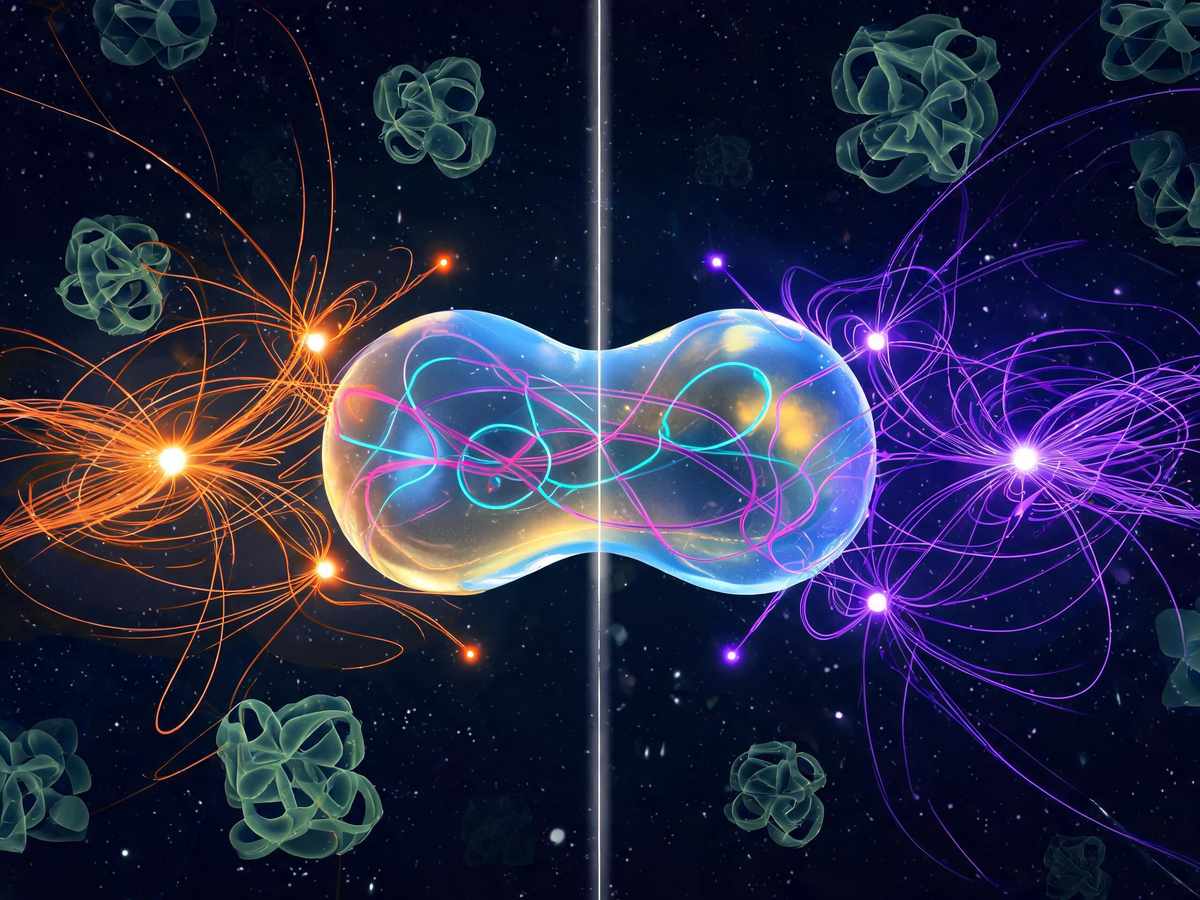
The Mirror That Connects: Electric-Magnetic Duality and the Geometric Langlands Program
Electric-magnetic duality in supersymmetric gauge theory maps onto the geometric Langlands program, revealing that fundamental symmetries of number theory arise naturally from quantum fields.

When Transformers Become Partial Differential Equations
Transformer training becomes a partial differential equation when token distributions evolve like probability flows under the attention mechanism's current.

Surveying the Chasm: When 1,675 Physicists Compared Their Cosmic Maps
A survey of 1,675 physicists reveals deep fragmentation across cosmology, quantum mechanics, and quantum gravity, challenging the assumption of field-wide consensus.

When Market Friction Learns to Hedge
A signature-based hedge steers the optimal trading strategy through market friction, transforming the river of price history into a tractable mathematical path.
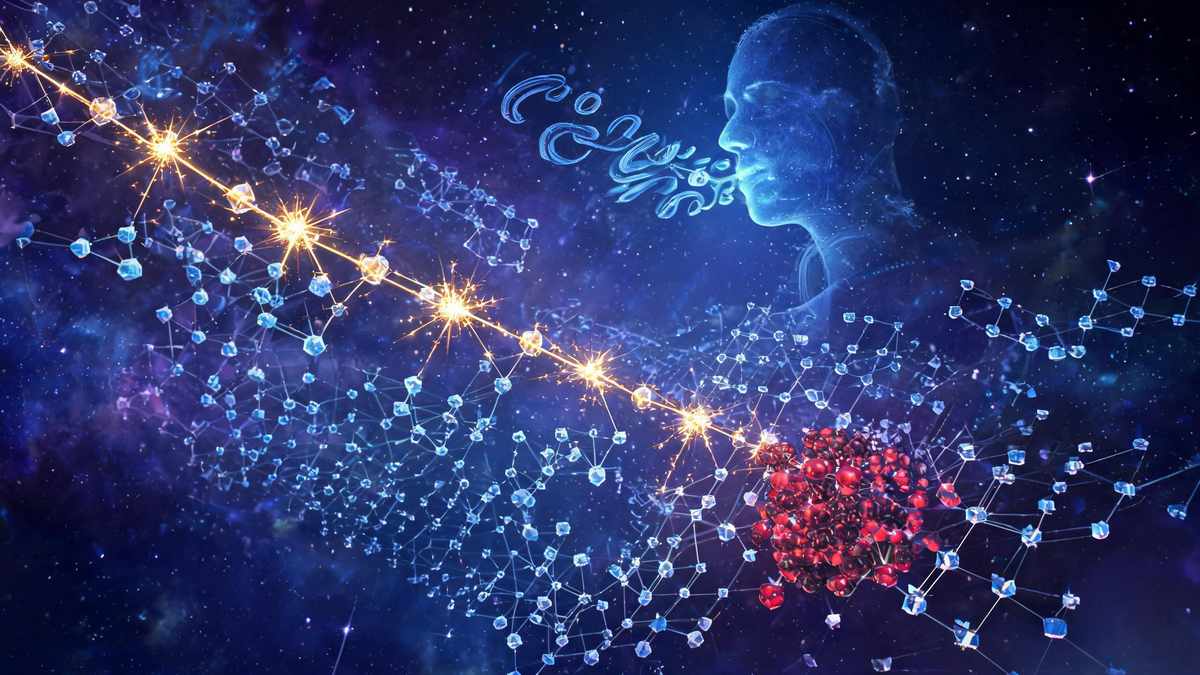
When AI Whispered: A Markov Chain Solves Erdős' Old Puzzle
A Markov chain with von Mangoldt weights, suggested by GPT-5.4 Pro, computes the Erdős sum of primitive sets in a sweeping new proof.
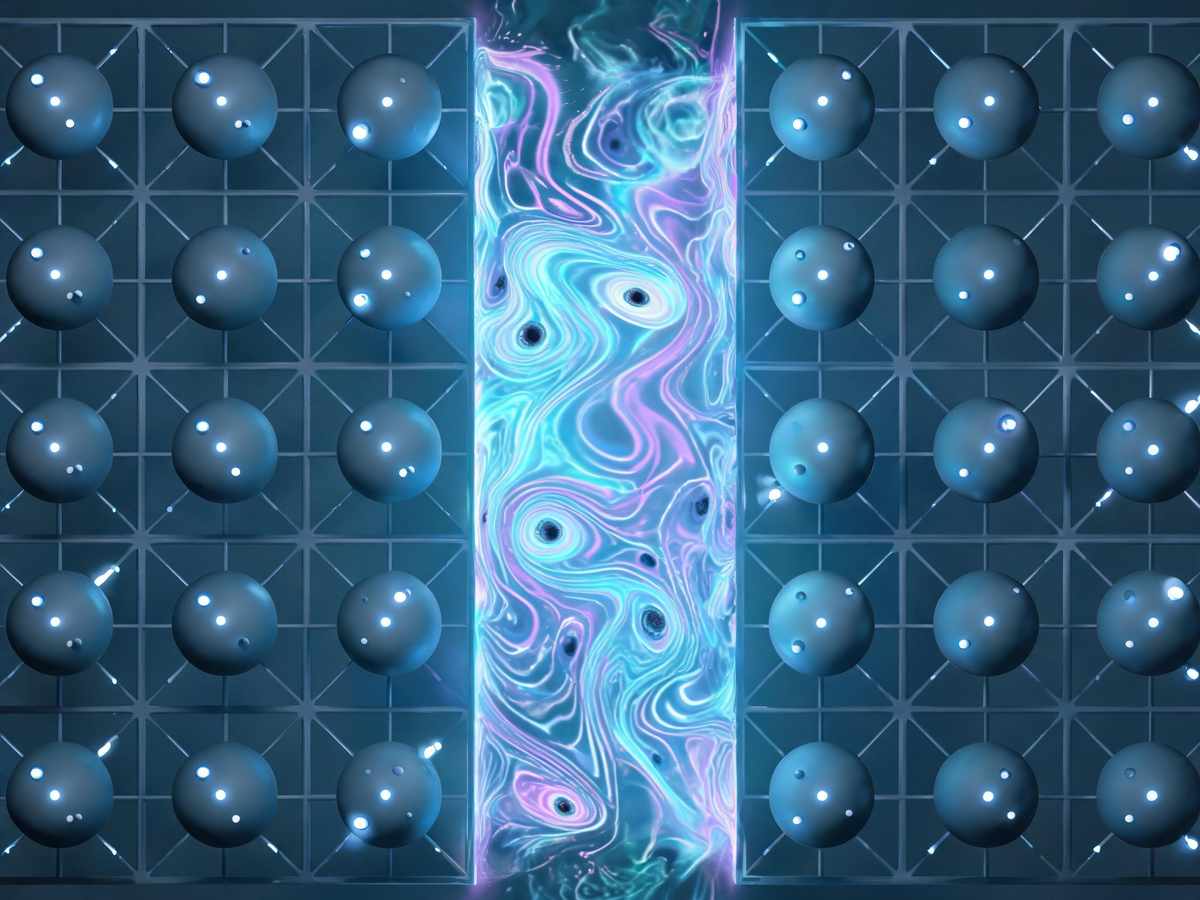
When Nothing Happens Is Actually Something: The Hidden Drama of Trivial Insulators
Two trivial insulators, each with displaced Wannier centers, host a conformal QED₃ state at their boundary where the energy gap closes.
When Numbers Become Strangers: Three Erdős Conjectures Fall to Probability
A unified probabilistic method has toppled three of Erdős's long-standing conjectures on the behavior of prime factors in consecutive integers.
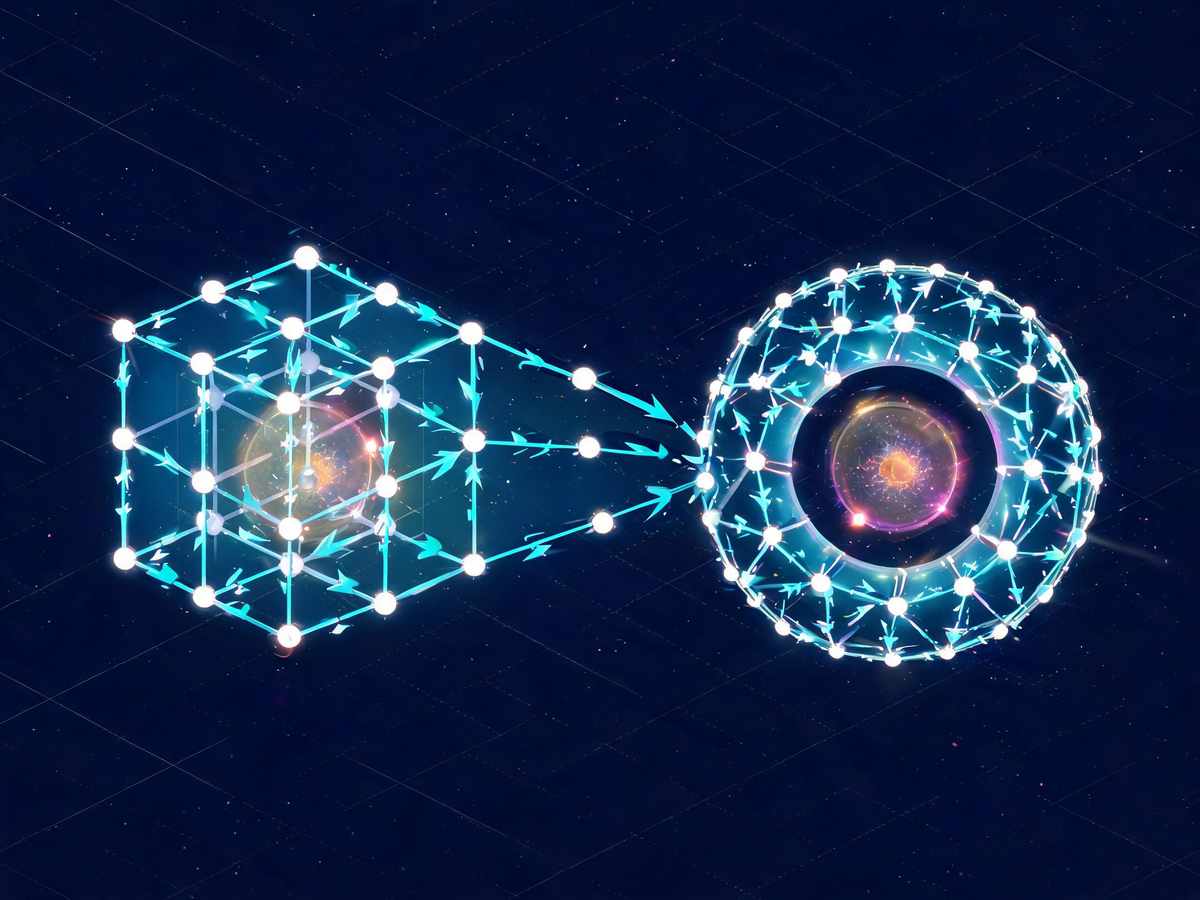
Weaving Space from Arrows: The Homotopy of Directed Graphs
Directed graphs, when interpreted through cubical homotopy, encode all topological shapes, from spheres to tori, in their arrow networks.
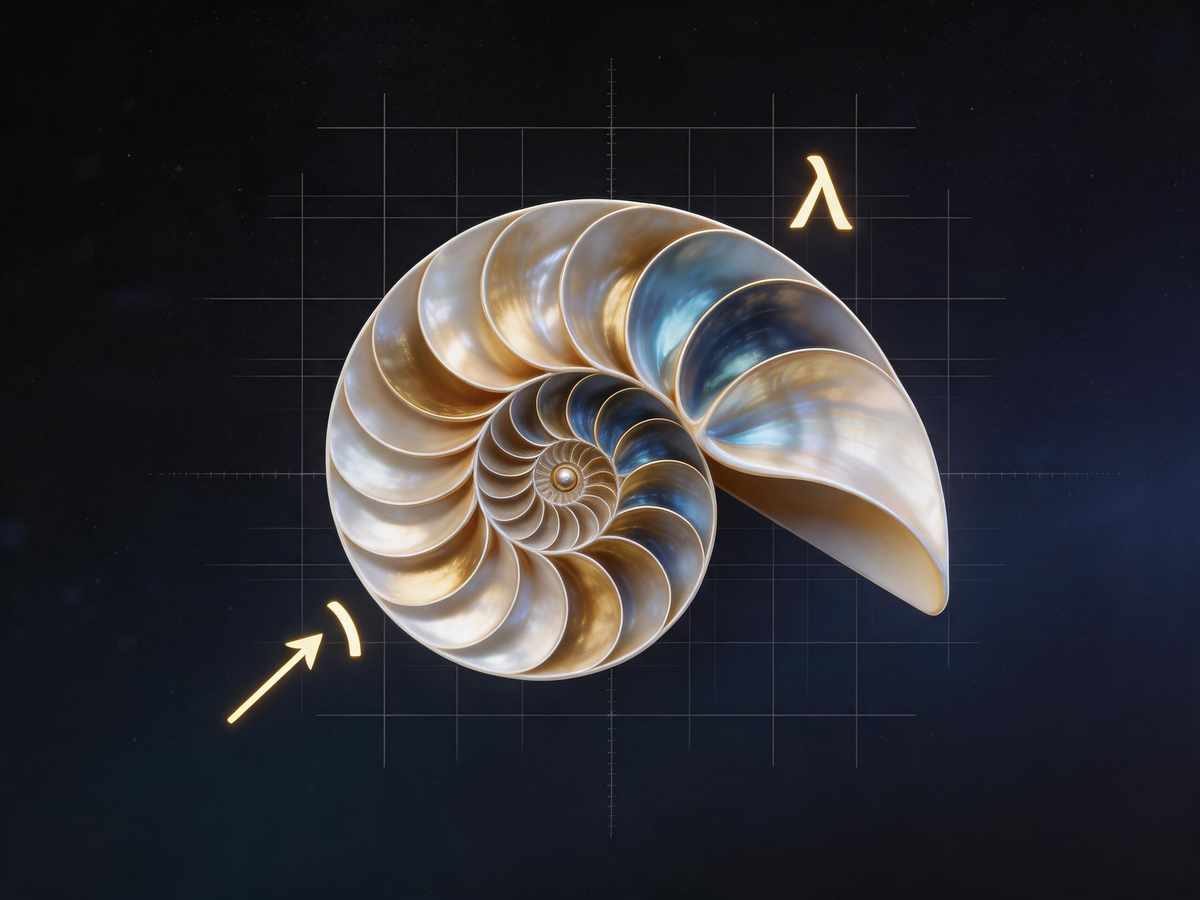
The Geometry of Shells: How Three Parameters Capture Nature's Spiral
Three parameters—a scalar, a vector, and a curve—mathematically generate the spiral geometry of nearly all molluscan shells.
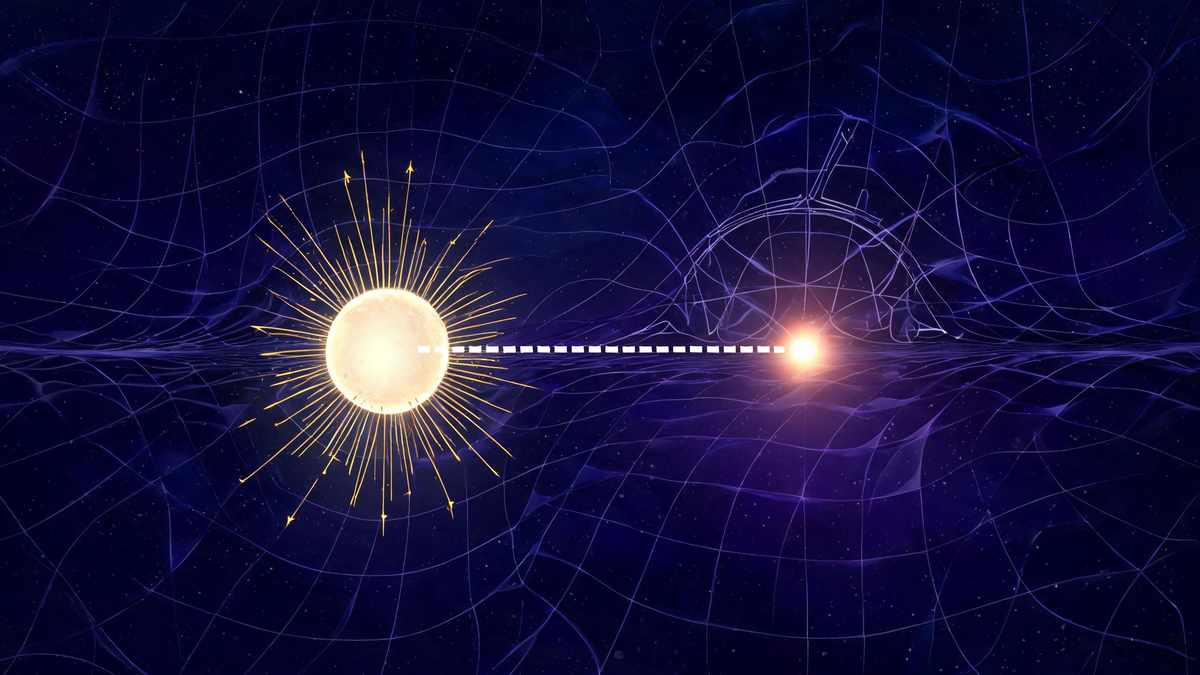
The Singularity That Wasn’t a Black Hole: Penrose’s 1965 Theorem Revisited
Penrose's 1965 theorem proves geodesic incompleteness, not necessarily black holes; cosmic censorship conjectures are required to bridge the gap.
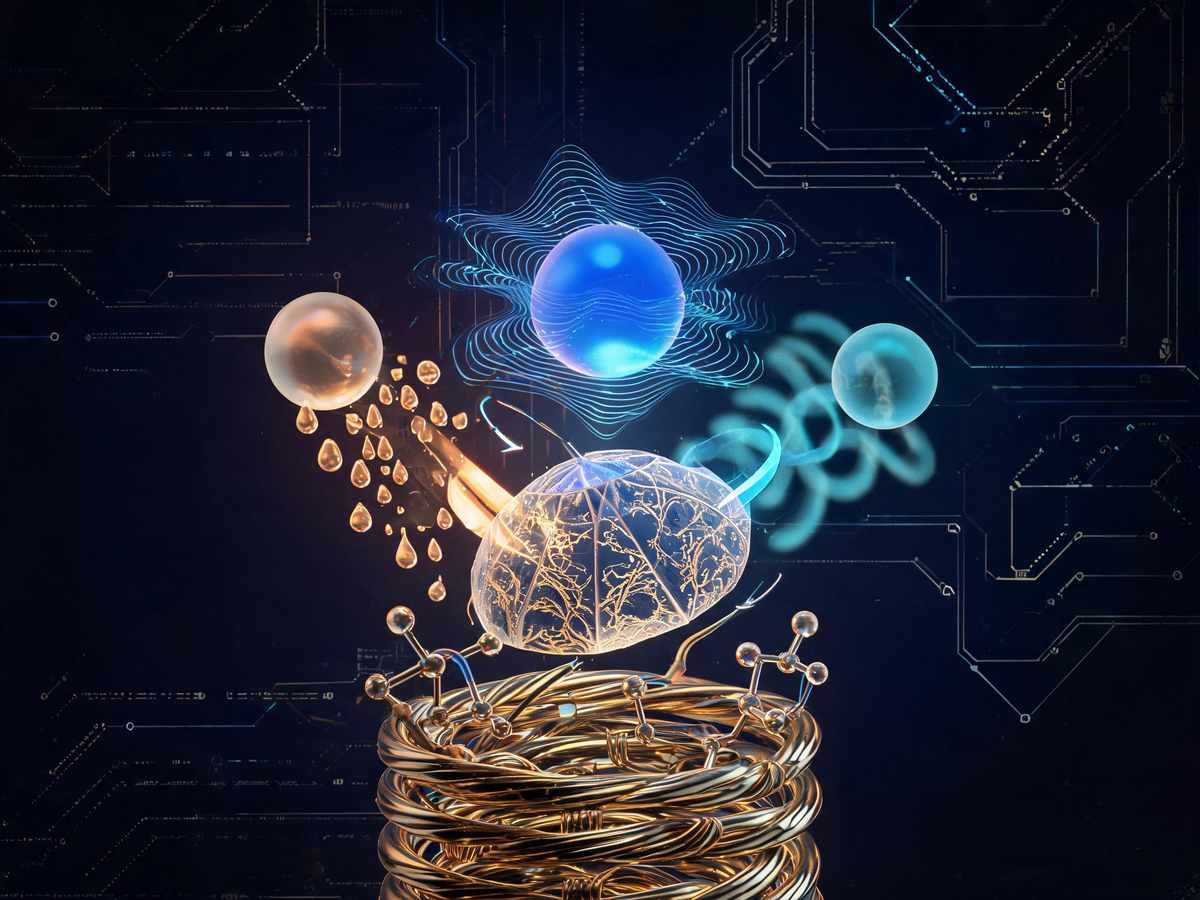
When Noise's Memory Becomes Its Undoing
In an NMR quantum processor, the Petz recovery map turns noise's own memory into a tailored undo operation, achieving high fidelity when the reference state matches the channel's fixed point.

When Swimming Helps You Disappear: How Marine Organisms Mask Their Scent
By stirring the water as they swim, marine organisms like fish can rapidly dilute their scent, becoming undetectable to distant predators.

A World That Refuses to Shine: JWST Reveals a Planet’s Blank Face
JWST’s mid-infrared spectrum of LHS 3844 b reveals a dark, space-weathered basaltic surface and no detectable atmosphere.

The Traffic Jam Inside Your Neurons
Mitochondrial traffic jams inside axons are caused by spherical mitochondria that tumble and block passage, while elongated ones glide smoothly through.
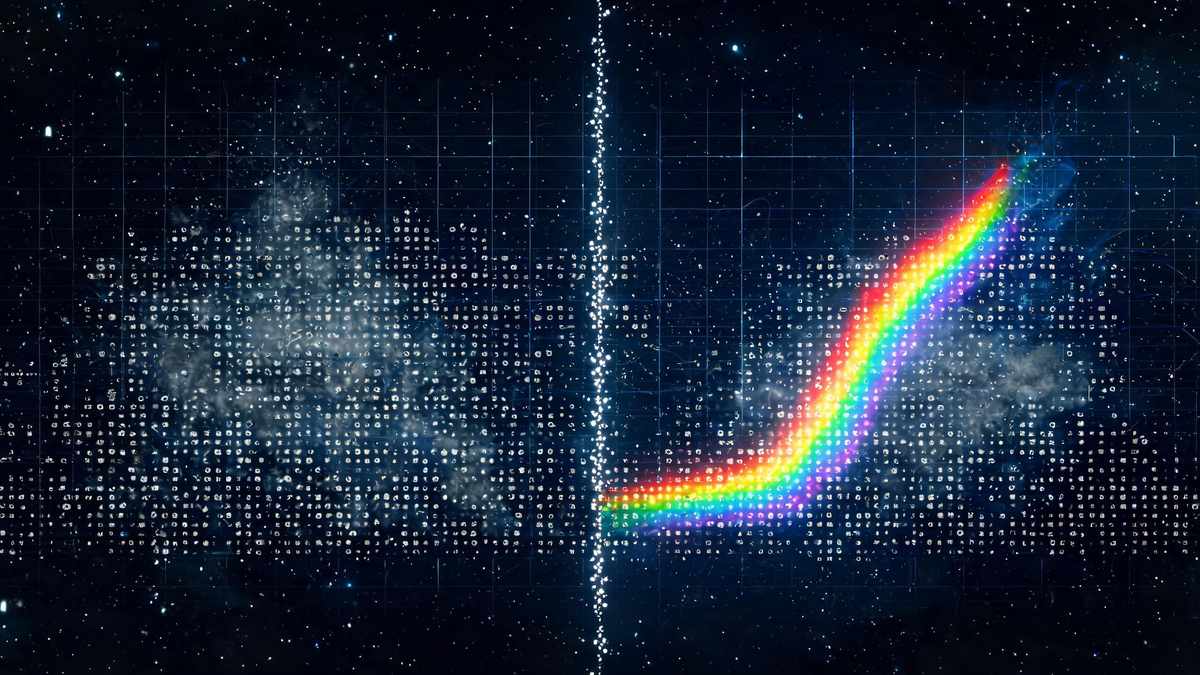
When Identical Noise Becomes a Signal
By forcing identical random number streams across scenarios, common random numbers transform stochastic noise into a precise signal in agent-based simulations.

When Better AI No Longer Means Better Models of Vision
As artificial vision models surpass human-level accuracy, their internal representations diverge from the primate brain's visual pathways, breaking a decade-long alignment.

When Brain Models See Movies but Miss the Story
Brain encoding models predict neural activity from movies, yet fail to grasp the story, revealing the gap between surface patterns and semantic understanding.

When a Language Model Learns to Derive Gravity
An AI apprentice carves cosmic perturbation equations into a stone of spacetime, learning gravity through worked examples and algebra.

Reading Bodies, Missing Minds: AI’s Struggle with Theory of Mind
AI can recognize a smile but misses the mind behind it, exposing a gap between textbook knowledge and real-time social understanding.

A Bar Born Where None Should Be
A stellar bar, over 7 kiloparsecs long, is revealed in the gas-rich galaxy GN20 just 1.5 billion years after the Big Bang, challenging theories of bar formation.

Quantum Compressed Sensing: Banishing the Logarithm
A single quantum probe, through domain-alignment evolution, directly maps sparse signal components to measurements, eliminating the logarithmic overhead of classical compressed sensing.
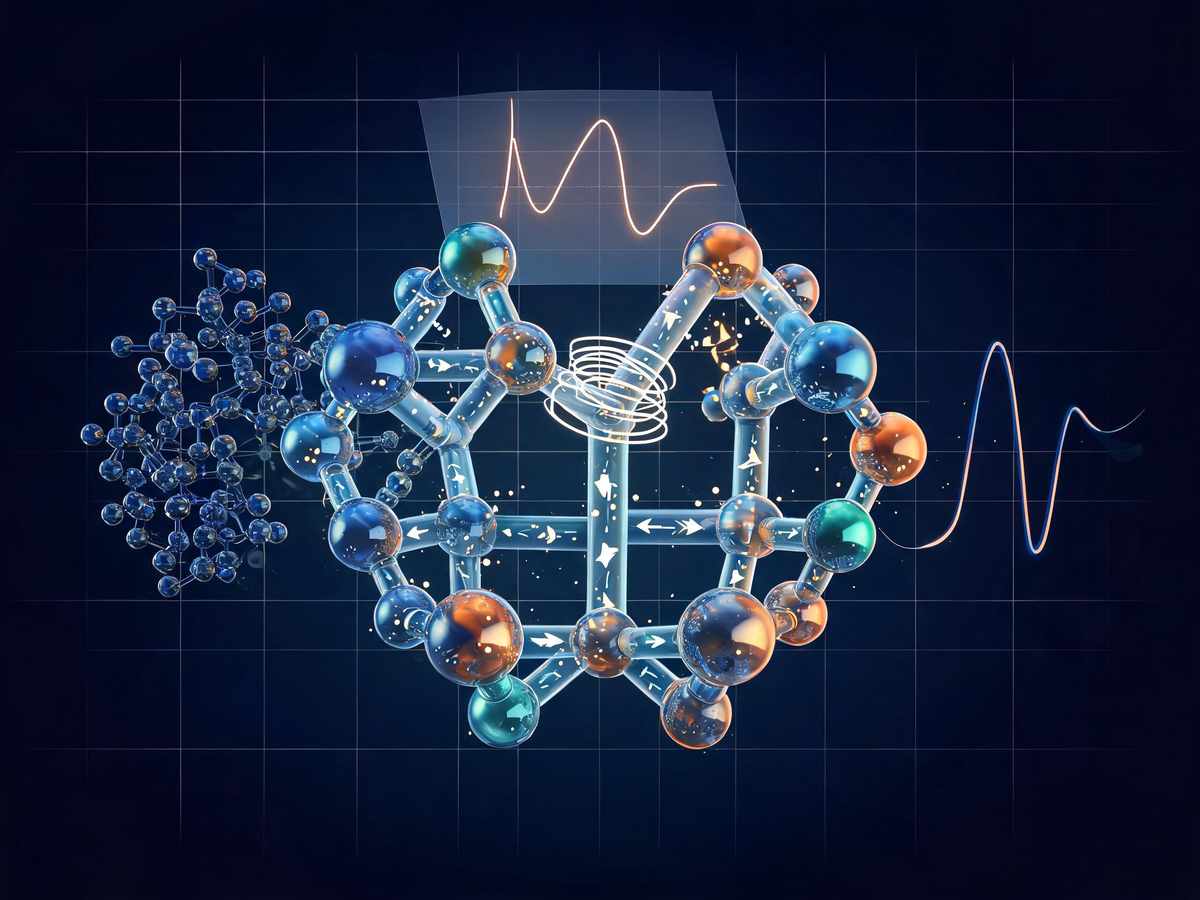
Breaking the Monotony: How Thermodynamic Networks Learn to Compute
By settling into a steady state, a thermodynamic network computes without clocks or logic gates, using negative differential conductance to break monotonic constraints.